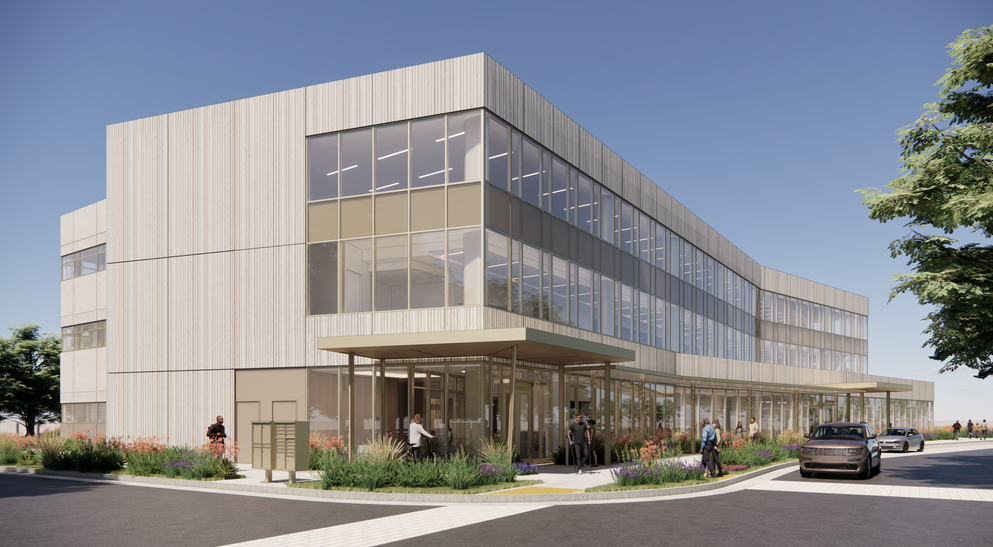
Northern California's Industrial Real Estate Boom
CategoriesNews & Blog

Northern California’s Industrial Real Estate Boom: A Market in Transition

Northern California’s industrial real estate sector continues to be a dominant force in the commercial property market, even as the industry adapts to the aftermath of years of rapid growth. The region’s industrial market is experiencing a significant shift, creating both challenges and opportunities for investors, developers, and tenants.

The Foundation of Sustained Growth

The Bay Area’s industrial market has demonstrated strong resilience, thanks to the region’s strategic location as a logistics and distribution hub. Prologis, the largest industrial property owner in the San Francisco Bay Area, manages 285 properties totaling over 30 million square feet that serve 600 customers. Additionally, 2 million square feet of logistics space is planned to meet the rising demand from customers across the region.

We’re witnessing a fundamental shift in how businesses approach their supply chain strategies,” says Akki Patel, CEO of LRE & Companies. “Northern California’s proximity to major ports, tech centers, and consumer markets makes it an indispensable part of the logistics puzzle. While we’re seeing some market normalization, the underlying demand for drivers remains incredibly strong.

Market Dynamics and Current Trends

The industrial sector has experienced significant changes over the past year. The San Francisco Bay Area industrial market closed Q2 2025 with an overall vacancy rate of 6.6%, with net absorption of negative 2,028,923 square feet. This represents a cooling from the hyper-competitive market conditions seen in previous years, when the market experienced 50% to 70% year-over-year rent growth, which was unprecedented.

The logistics sector remains stable, with vacancy rates holding at the long-term average of 5.8%, even as flex space vacancy rates increase. This contrast underscores the ongoing strength of e-commerce and distribution-focused properties.

The E-Commerce Effect

Major players continue to invest heavily in the region’s industrial infrastructure. Amazon has reignited its Bay Area real estate expansion with a significant industrial lease, committing to more than 1.2 million square feet of new warehouse space. This type of large-scale commitment underscores the ongoing importance of Northern California as a distribution and fulfillment hub.

The e-commerce boom has permanently shifted consumer expectations around delivery speed and convenience,” explains Patel. “Companies need to be closer to end consumers, and Northern California’s population density and purchasing power make it a key location for any serious distribution strategy.

Regional Hotspots and Development Activity

Silicon Valley, located in the San Jose/Sunnyvale/Gilroy areas, saw new developments, with over 1.1 million square feet of new space delivered in 2024. However, more than 20 percent of that space is still available for lease. This activity demonstrates both confidence in long-term demand and the challenge of aligning new supply with market absorption.

The East Bay remains a vital area for industrial growth, offering more affordable options while maintaining strong transportation connections. These submarkets are attracting increasing interest from tenants who want to balance costs with operational efficiency.

Looking Ahead: 2025 and Beyond

Industry forecasts point to a stable period as the market absorbs recent supply increases. The demand for warehouse and logistics spaces is expected to rise significantly, indicating that although growth may slow from peak levels, the overall trend stays positive.

“We’re entering a more balanced market environment,” notes Patel. “The days of 70% annual rent increases are behind us, but that’s actually healthy for the ecosystem. Tenants can make more strategic long-term decisions, and developers can focus on quality and efficiency rather than just racing to deliver square footage.”

Investment Opportunities

The current market conditions offer unique opportunities for sophisticated investors. While vacancies have increased slightly, they are still well below historical averages in many submarkets. The average industrial vacancy rate nationwide rose to 6.1 percent in the second quarter of 2024, remaining well under the double-digit rate seen during the Great Financial Crisis.

For investors and businesses considering Northern California’s industrial market, understanding the differences between various property types and locations is essential. Logistics and distribution facilities continue to garner top interest, while flex spaces may offer valuable opportunities for appropriate uses.

Conclusion

Northern California’s industrial real estate boom is evolving rather than coming to an end. The market is transitioning from rapid growth to sustainable expansion, fueled by unique geographic advantages and strong demand fundamentals. For stakeholders who understand these trends, the current landscape offers compelling opportunities to participate in one of the nation’s most dynamic industrial markets.

As the market matures further, success will increasingly rely on strategic positioning, operational efficiency, and thorough market knowledge —precisely the environment where experienced professionals can generate lasting value.


CategoriesNews & Blog

The Joy of Being a Commercial Real Estate Developer in California: Riding the Golden State’s Real Estate Waves

There’s something uniquely thrilling about being a commercial real estate developer in California. Every morning, I wake up knowing that I’m working in one of the world’s most dynamic and demanding markets where innovation meets opportunity, and where the next project could transform a community.

The Highs: Where Dreams Meet Reality

The peaks in California commercial development are unlike anywhere else. When you successfully navigate a complex entitlement process and break ground on a mixed-use project in San Francisco or deliver a state-of-the-art logistics facility in the Inland Empire, the satisfaction is deep. You’re not just building structures; you’re creating ecosystems where businesses thrive, jobs are created, and communities grow.

California’s diverse economy offers a wide range of development opportunities. Projects can include everything from advanced research facilities for growing biotech firms to manufacturing plants supporting renewable energy efforts. This variety keeps the work exciting and intellectually stimulating, while placing developers at the forefront of emerging industries.

The financial rewards can also be significant. When market conditions are right and you’ve positioned a project properly, California’s premium markets can provide exceptional returns that justify the complexity and risk involved in development here.

The Lows: Navigating Complex Waters

Let’s be honest—California development isn’t for the faint of heart. The regulatory environment can be complex, with multiple jurisdictions, environmental reviews, and approval processes that can extend timelines and increase budgets. What seems like a simple project can turn into a multi-year journey through various agencies and community meetings.

Construction costs in California consistently rank among the nation’s highest, driven by strict building codes, labor shortages, and material costs. Add in the ongoing threat of seismic requirements and environmental regulations, and project budgets can quickly go over initial estimates.

Market volatility poses another challenge. California’s economy, though strong, can experience sharp swings. Tech downturns, interest rate changes, and evolving work habits, especially after the pandemic, can quickly shift demand across different property types.

Areas of Opportunity: The Future is Bright

Despite the challenges, California offers unrivaled opportunities for innovative developers. The state’s focus on sustainability drives demand for green buildings and renewable energy projects. ESG-focused development isn’t just fashionable here—it’s becoming crucial for long-term success.

The evolution of work patterns has created opportunities in adaptive reuse projects, converting outdated office buildings into mixed-use developments or modern logistics facilities. California’s housing crisis also opens opportunities for innovative residential-commercial hybrid projects that meet multiple needs at once.

Emerging technologies such as artificial intelligence, biotechnology, and clean energy continue to increase demand for specialized facilities. Developers who can anticipate these industries’ unique spatial requirements will be well-positioned for the next wave of growth.

The Bottom Line

Being a commercial real estate developer in California involves navigating complexity while seizing exceptional opportunities. Yes, the challenges are substantial, but so are the rewards—both financially and personally. We’re not just constructing properties; we’re shaping the future of one of the world’s most vital economies.

Every project teaches us something new, every challenge we overcome builds resilience, and every successful development helps California continue to evolve as a global leader in innovation and commerce.


CategoriesNews & Blog

The Art of Patient Capital: Why a Long-Term Vision Prevails in Today’s Real Estate Market

In an era dominated by quarterly earnings reports and instant gratification, the commercial real estate industry finds itself at a vital crossroads. While some chase quick profits and superficial gains, true transformative development demands something increasingly scarce in today’s market: strategic patience.

At LRE & Companies, we’ve built our reputation on the belief that the most valuable real estate ventures don’t stem from hurried decisions or opportunistic flips. Instead, they result from thorough market analysis, community insight, and the discipline to wait for the right opportunity to emerge.

Beyond the Quick Win Mentality

The pressure for quick returns has never been greater. Investors seek fast exits, developers pursue quick turnover, and market volatility makes patience seem like a luxury few can afford. However, this emphasis on short-term gains often results in leaving money on the table and ignoring community needs.

Patient capital isn’t about acting quickly; it’s about being strategic with timing. When we evaluate potential developments, we look beyond immediate profit to understand the community’s future, demographic shifts, and long-term economic factors. This broad approach helps us identify opportunities others might overlook because they require a longer development timeframe.

The Community-First Advantage

“True value creation in real estate happens when you align long-term vision with community needs,” says LRE & Co, CEO Akki Patel. “We don’t just build buildings—we build lasting partnerships with the communities we serve, and that requires patience to understand what those communities actually need.”

This philosophy guides our investment strategy. Instead of pursuing projects that promise quick returns but offer little lasting value, we focus on developments that enhance economic vitality and social progress. These projects often take more time to develop and require more initial analysis, but they consistently deliver better long-term results.

Strategic Patience in Practice

Patient capital manifests in several key ways throughout our development process. We perform a thorough market analysis, taking the time to understand not only current conditions but also upcoming trends. We work closely with local stakeholders to ensure our projects address genuine community needs, rather than creating solutions that look for problems.

Most importantly, we keep the financial flexibility to withstand market cycles. While competitors scramble during downturns, patient capital allows us to keep developing quality projects when construction costs are lower and competition diminishes.

The Long-Term Payoff

The results speak volumes. Our disciplined approach to patient capital has allowed us to build a portfolio that performs well across various economic cycles. By emphasizing low volatility and sustainable returns instead of quick profits, we’ve created projects that strengthen community bonds while providing steady value to our investors.

“What excites me most about the next decade is the potential to create developments that truly enhance community vitality. As we see demographic shifts and changing needs, patient capital allows us to build solutions that will serve these communities for generations,” says LRE & Co, CEO Akki Patel.

In today’s fast-paced market, strategic patience isn’t just a competitive advantage—it’s essential for long-term success in commercial real estate development.

To learn more about how we can help you, please visit https://lrecompanies.com or email us at info@lrecompanies.com.

CategoriesNews & Blog

LRE & Co. Completes 2025 Summer with Successful Intern Program

Meet Jack Shin: From Statistics Student to Real Estate Explorer

What happens when a UCLA Statistics major with no real estate experience spends a summer at LRE & Co.? We sat down with Jack Shin to discover how his curiosity led him from building CRM systems to exploring an entirely new industry.

About Jack

Jack Shin is a sophomore at UCLA studying Statistics and Data Science from the San Ramon Bay Area. He learned about LRE & Co. through Mr. Victor Chiang and was drawn to apply because of his curiosity about the real estate industry, despite having no prior experience.

The Experience

“I felt like I was learning something new every single day,” Jack reflected. His days varied dramatically – from crunching numbers in Excel spreadsheets to clearing out warehouses and implementing the company’s CRM system through ZOHO.

The project he’s most proud of? Creating a functional CRM system that helps employees track deal phases and manage projects from acquisition to development.

Key Takeaways

Most Challenging Aspect: Being given projects and expected to complete them independently. Jack credits his problem-solving skills and persistence for helping him deliver results.

Biggest Surprise: “The sheer amount of detail and steps involved in completing a project from start to finish is remarkable. I can’t look at gas stations or strip malls the same way anymore.”

Most Valuable Lesson: Persistence and the importance of asking questions. “It’s better to over-communicate than to under-communicate,” he learned from colleagues.

Career Impact

While Jack is still figuring out his career path, this internship has opened his eyes to the real estate industry. He’s currently completing a salesperson’s course and hopes to receive his license soon. “I see myself graduating from college with a job that might involve real estate,” he shared.

Advice for Future Interns

“Work diligently and ask questions when you’re curious or uncertain. Seize every opportunity that comes your way and give 100%,” Jack advises. He also recommends taking a salesperson’s course to learn terminology and basic concepts beforehand.

Jack describes his internship in three words: “Rewarding, Eye-opening, Dynamic.”

“Working at LRE & Co. is an incredible opportunity that provides real work experience to truly explore the world of real estate,” he concluded. “I’m truly grateful for the opportunity and would consider returning to work for LRE & Co. in the future.”

At LRE & Co., our commitment to developing future generations within our company remains a cornerstone of our values, as demonstrated through successful programs like our 2025 summer internship.


CategoriesNews & Blog

LRE & Co Secures County Approval for Major Retail Development in Crescent City, California

We’re thrilled to announce a major milestone in our ongoing commitment to developing underserved markets across California. LRE & Co has successfully secured county approval for our retail development project in Crescent City, marking a significant step forward in the community’s continued economic growth.

Project Overview

After a thorough review process with the Del Norte County Planning Department, we’ve received approval to proceed with this transformative development. The 87,120-square-foot site, strategically located at 915 Washington Boulevard directly across from Super Walmart, will provide approximately 12,000 square feet of new retail space to the community.

The development will feature:

  • A Quick Service Restaurant (QSR) building
  • Two retail shop pads with modern drive-thru capabilities
  • Multiple inline tenant opportunities
  • Two additional drive-thru pads

Strategic Location & Market Opportunity

This prime location offers exceptional advantages for both tenants and the community:

  • High Traffic Volume: Approximately 18,000 vehicles per day along nearby Highway 101
  • Institutional Proximity: Direct access to key community anchors, including Sutter Coast Hospital and Del Norte High School
  • Regional Connectivity: Close to Jack McNamara Field Airport and the world-renowned Redwood National and State Parks
  • Tourism Benefits: Seasonal surges from Northern California’s coastal and forest destination visitors

Crescent City serves as the primary retail hub for a trade area of over 30,000 people, including Del Norte County, southern Oregon communities like Brookings, and surrounding tribal and rural populations. This development will significantly enhance retail accessibility for this underserved region.

Commitment to Thoughtful Development

The approval process involved careful planning, including comprehensive environmental assessments and traffic studies, ensuring the project aligns with both the city’s general plan and sustainability goals. Our team is dedicated to creating a development that meets community needs while preserving the area’s distinctive natural environment.

“Our team is committed to thoughtful development that brings lasting value to communities,” said Akki Patel, President of LRE & Co. “With new tenants, increased access to essential retail, and local job creation, this project is a win for Crescent City and the broader trade area we serve. Our deep understanding of mid-sized and underserved markets has positioned us as pioneers in regions where many national brands are now looking to grow—and we’re proud to lead that evolution.”

Leasing Progress & Timeline

Phase 1 leasing is already well underway, demonstrating strong market confidence in this development:

  • Signed Leases: National agreements secured with a leading national burger chain and a national chicken brand
  • Active Negotiations: Currently in progress with a prominent national coffee tenant
  • Available Opportunities: One additional drive-thru pad and an end cap retail space remain available, offering rare visibility and access in this limited-supply corridor

Construction is targeted to begin in early 2026, bringing new jobs and economic opportunities to the Crescent City area.

About This Project

This entitled project marks a significant milestone in Crescent City’s evolution as a regional commercial hub. The development reflects LRE & Co.’s long-term commitment to thoughtful, economically impactful investment in underserved California markets.

As we move forward into the next stage of development, we’re excited to help continue revitalizing Crescent City and look forward to sharing more updates as we progress in this effort.

For leasing inquiries or more information about this development, please get in touch with LRE & Co.

CategoriesNews & Blog

California’s Real Estate Growth is Real—And It’s Just Getting Started

California has always been a land of opportunity with the earliest explorers having their eyes set on the West Coast to the gold rush of 1848—and right now, opportunity is booming again in real estate. Despite market fluctuations and rising interest rates, high construction costs, and  California being a notoriously difficult regulatory landscape, growth across the state is picking up pace again. Markets that were once overlooked are now epicenters of development, and areas that have consistently drawn families and businesses continue to expand. For developers who know where to look, the outlook is strong.

At LRE & Companies, we’ve always focused on projects that align with long-term regional growth. Two of our latest developments—one in Roseville and one in Folsom—are perfect examples of this strategy in action. These aren’t just isolated builds in the middle of desolate areas. They’re part of the broader story of California’s evolution.

Our Roseville Junction project is a prime example. This 10-acre development brings together a healthy mix of hospitality, dining, and entertainment in a city that has seen tremendous population and employment growth in the last decade. It wasn’t a gamble—it was a strategic response to what’s already happening on the ground. Roseville is becoming a major draw for families and professionals who want a high quality of life with access to strong schools, jobs, and retail. Our project adds to that fabric and gives the community something new to gather around.

Folsom Ranch tells a similar story. With the project taking shape and new infrastructure connecting it to the larger Sacramento region, the demand for retail, medical services, and daily conveniences is exploding. Our newest center there is designed to meet that need, anchored by essential services that make life easier for the growing number of families moving in. It’s not just about building anything—it’s about building the right things in the right places at the right time.

What makes these projects stand out is that they weren’t developed in a vacuum. We spent time understanding the local dynamics, working closely with city leaders and local business partners, and designing for long-term sustainability—not just quick wins. That’s how we’ve always approached real estate at LRE: find the path of growth, work with the community, and create something that adds value for decades to come.

Looking at the broader picture, California’s real estate market is undergoing a pivotal shift. New state-level policy changes are helping remove some of the old roadblocks to development, and cities are more open than ever to public-private partnerships that make smart growth possible. It’s still a challenging environment, but it’s one full of possibility.

For those of us who have been building in this state for years, the message is clear: California is growing. And if you know how to grow with it, the future looks bright.

CategoriesNews & Blog

Groundbreaking for highly anticipated shopping center in Folsom Ranch

The first official steps were taken today in an eagerly awaited shopping center in Folsom Ranch. On Thursday, June 19, community leaders and developers took part in a groundbreaking ceremony to kick off the building of “Southpointe”, which is located on the corner of White Rock Road and E. Bidwell.

The center will be anchored by tenants Circle K and The Learning Experience and is envisioned to be a convenient area that will fill various community needs from groceries, eateries and other services. Developers are in the process of trying to attract a variety of businesses to the center.

Among the attendees of the groundbreaking were Folsom Mayor Sarah Aquino and Vice Mayor Justin Raithel. Aquino said based on consistent feedback she receives from the community, there is building excitement for this project.

“Every week, someone emails me or texts me or tags me on Facebook and says, when are we going to build Southpointe shopping center and when are we going to get that grocery store,” said Aquino. “And so I’ve been happily able to say that Southpointe is coming very soon.”

LRE & Companies, the developer and construction firm, said it is currently in negotiations with a regional medical provider to lease one of the on-site buildings, and a “nationally recognized QSR brand” to the space.

“Breaking ground on Southpointe is more than a construction milestone—it’s the beginning of something transformative for Folsom Ranch,” said Akki Patel, CEO of LRE & Companies. “With trusted brands like Circle K and The Learning Experience already committed, we’re confident this development will be a magnet for businesses that want to grow alongside this vibrant and fast-expanding community.”

Developers said Southpointe at Folsom Ranch offers a mix of high-end office, medical and retail buildings which are available for sale or lease.

Southpointe is part of the 3,585-acre Folsom Ranch master-planned development, which is considered one of the region’s fastest growing corridors. Developers say phase one infrastructure is planned to be completed by November; additional dates for next phases are not certain yet.

CategoriesNews & Blog

Employee Highlight: Meet Jacob Sena, Development Acquisition Associate at LRE & Companies

At LRE & Companies, we are experiencing a period of exciting growth — expanding our footprint, diversifying our project pipeline, and strengthening our team with fresh talent and expertise. As we continue to scale across new and existing markets, we know that our success is driven not only by visionary leadership and strategic partnerships but also by the exceptional individuals who bring passion, creativity, and dedication to everything we do.

This month, we’re proud to introduce one of the newest members of our growing team: Jacob Sena, Development Acquisition Associate.

Jacob attended the University of Oregon, where he majored in Business Administration. During college, he completed internships in marketing and sales, initially considering those fields for his career. However, after graduating, Jacob realized they weren’t the right fit. Through conversations with professionals in different industries, he decided to pursue real estate, beginning his career in the leasing office for an affordable housing development and property management company. While that experience was valuable, Jacob always knew he wanted to focus on commercial real estate — so when the opportunity at LRE & Companies arose, he was determined to take it.

Currently, Jacob serves as a Development Acquisition Associate, supporting various tasks throughout the development timeline. What excites him most is contributing to the growth of LRE’s project pipeline and helping expand the company’s presence in both new and existing markets.

Jacob’s previous work in affordable housing shaped his understanding of how a thriving environment can positively impact individuals. He recognizes the importance of providing quality housing near essential services and destinations — a perspective that now guides him in making informed decisions about land acquisition and tenant mix for each project.

During the hiring process, Jacob was especially drawn to the chance to learn from experienced professionals like Akki Patel and Victor Chiang, both of whom bring valuable knowledge and insight. Since joining the team, Jacob has already learned a lot from working with them and is eager to continue growing under their guidance.

One thing Jacob has noticed about LRE’s company culture is how willing everyone is to offer help and support. He describes it as refreshing to be in an environment where asking questions is encouraged, and where colleagues generously share advice and insights they wish they’d had when starting out — support that Jacob has already found incredibly valuable.

Outside of work, Jacob enjoys golfing with his brother and dad, trying to surf when the weather permits, and spending time with family, friends, and his girlfriend. He’s also always up for fun weekend trips to interesting places. Something his colleagues might be surprised to learn? Jacob was homeschooled for a year in middle school while traveling the world with his family, visiting over 30 countries — and he has a twin brother, though they don’t look anything alike.

Jacob’s favorite quote is from Albert Einstein: “The more I learn, the more I realize how much I don’t know.” For Jacob, this quote is about humility and openness — a mindset that reminds him that expertise isn’t about having every answer but about the willingness to keep asking questions.

If he could develop or invest in any project, Jacob would choose to develop a residential community in a popular holiday destination, such as Mexico or Hawaii. This type of project would let him express his creativity, explore new concepts, collaborate with diverse people, and gain fresh perspectives — all while enhancing his skills and contributing meaningfully to his personal and professional journey.

To Jacob, community means a group of people who offer connection, support, and a shared sense of purpose — a space where he feels seen, understood, and valued. He hopes his work at LRE will help create communities where people can give and receive help, encouragement, and inspiration, making challenges feel lighter and successes more meaningful.

We are proud to have Jacob as part of the LRE & Companies team and look forward to the many ways he will help shape the future of our developments and communities.

CategoriesNews & Blog

Mastering Franchise Real Estate: Key Strategies for Successful Expansion

Expanding a franchise through commercial real estate is both a strategic and financial undertaking that requires careful planning, deep market analysis, and adaptability to economic and regulatory conditions. Success hinges on selecting optimal locations, understanding local market dynamics, and structuring deals that ensure long-term profitability and sustained growth.

Strategic site selection: The foundation of success

Site selection is one of the most critical decisions in franchise development. Savvy developers rely on demographic insights, economic data, and an understanding of the competitive landscape to make informed choices. Key considerations include evaluating foot and vehicle traffic, analyzing income levels, and assessing proximity to complementary businesses. Areas showing strong job growth and rising populations typically offer greater long-term potential.

In addition to market demand, navigating zoning regulations and permitting processes is essential to avoid costly delays. Today, many consumers are gravitating toward suburban retail centers that offer convenience and accessibility. Developers who respond to these shifts with well-placed, well-designed locations are positioned for long-term success.

Navigating multi-state expansion challenges

Scaling a franchise across multiple states introduces complexity-logistically, financially, and legally. Each state comes with its own tax codes, permitting requirements, and development standards. To address these challenges, developers must establish strong relationships with local officials early in the process. These partnerships can expedite zoning approvals and, in some cases, unlock financial incentives like tax abatements or grants.

Construction costs and timelines can vary widely by region. Partnering with regional contractors and suppliers helps manage labor and material expenses while ensuring local expertise. Additionally, consumer preferences often differ by geography. A suburban market in Texas may demand drive-thru service, while a walkable retail center may perform better in parts of California. Recognizing these nuances, and aligning design accordingly, is essential for successful expansion.

Financial considerations: Investment and incentives

Well-structured real estate deals are the foundation of sustainable franchise growth. One of the first financial decisions is whether to buy or lease the property. Ownership provides long-term control and equity, while leasing offers flexibility, especially in markets that are still evolving.

Beyond acquisition, developers must factor in total development costs, including construction, permitting, and operating expenses. Public-private partnerships and local incentives, such as tax credits or infrastructure grants, can significantly improve financial feasibility. It’s also important to forecast revenue and calculate break-even timelines to ensure a project aligns with broader business goals. Balancing initial investment with long-term profitability is key to success.

Case study: Expanding into emerging markets

A recent franchise project in a fast-growing suburban corridor demonstrates how strategic planning leads to successful outcomes. Developers identified an underutilized retail parcel in an area with increasing population density and consumer spending. After a detailed feasibility study, they acquired a high-traffic site with strong visibility and accessibility.

Early collaboration with city officials helped secure permitting approvals and unlock financial incentives. The team developed a multi-tenant retail hub that brought several franchise brands together, driving greater foot traffic and creating a community-oriented destination. By adapting the site plan to meet local zoning requirements and integrating economic trends into their strategy, the developers ensured a smooth and profitable launch.

Key trends influencing franchise real estate

Several trends are currently shaping the franchise real estate landscape. The continued rise of suburban retail hubs is driven by shifts in where people live, work, and shop. Simultaneously, digital integration is influencing store formats, with many franchises incorporating online ordering, curbside pickup, and streamlined layouts.

Sustainability is also top-of-mind. Developers are increasingly investing in energy-efficient materials and systems to reduce operating costs and environmental impact. Meanwhile, inflation and rising interest rates are prompting more conservative investment strategies and tighter deal scrutiny, making data-driven decision-making more important than ever.

Best practices for franchise development

To thrive in today’s dynamic market, commercial real estate professionals should prioritize thorough market research and early stakeholder engagement. Collaborating with city officials and community organizations can speed up approvals and build goodwill. Investing in high-quality locations may require a larger upfront commitment, but it often results in stronger long-term returns.

Flexibility is also essential. A balanced mix of leased and owned properties provides agility across different markets and economic conditions. Developers who remain adaptive and informed are best positioned to navigate change and sustain growth.

Franchise real estate development demands a thoughtful blend of research, financial planning, and regulatory navigation. By focusing on site selection, cost management, and evolving trends, developers can build successful, future-ready franchise locations that thrive in today’s competitive market.

CategoriesNews & Blog

Retail’s Comeback Is Real — And Cities Should Help Us Build on It

After years of speculation about the “death of retail,” something remarkable is happening in 2025: brick-and-mortar retail is not just surviving — it’s thriving. Across the country, retail vacancy rates have dropped to their lowest levels in decades, defying predictions that online shopping would render physical stores obsolete.

According to the National Association of Realtors, as of March 2025, the retail sector continues to post the lowest vacancy rate among commercial property types, with general retail leading the way at a 2.6% vacancy rate. This resilience is a testament to the enduring value of physical retail spaces in our communities.

But if we want this momentum to continue — if we truly want to revitalize our downtowns and suburban corridors — cities need to take an active role in encouraging it. One powerful way to do that is by offering targeted subsidies to businesses and developers willing to invest in vacant storefronts and neglected spaces.

When storefronts sit empty, neighborhoods suffer. Blight takes root. Economic activity slows. Property values decline. But when businesses return — whether it’s a local café, a boutique, or a national brand — they create jobs, attract foot traffic, and restore a sense of vibrancy and safety. Retailers today aren’t just selling products; they are offering experiences, fostering community interaction, and anchoring broader economic ecosystems.

As developers, we are ready to meet this moment. But revitalizing a struggling corridor often means taking substantial financial risks: outdated buildings, complex permitting, expensive tenant improvements, and the uncertainty of drawing enough traffic to sustain a business. Public-private partnerships can change that calculus. By offering grants, tax incentives, or low-interest financing to cover renovation costs or initial lease assistance, cities can transform empty spaces from a liability into an engine of opportunity.

We’ve seen glimpses of this model work. In communities where local governments proactively supported revitalization efforts — through façade improvement grants, rent subsidies for new tenants, or expedited permit processes — retail corridors rebounded dramatically. It’s not charity; it’s smart economic policy. A modest upfront investment generates recurring tax revenue, reduces crime, and enhances the overall quality of life.

At LRE & Companies, we believe revitalization is about more than just leasing space; it’s about building ecosystems that uplift entire communities. We work hand-in-hand with city governments, small business owners, and community organizations to ensure that the spaces we create aren’t just beautiful — they’re purposeful.

The resurgence of brick-and-mortar retail is a golden opportunity — but it’s not guaranteed to last if we don’t foster it deliberately. As developers, we are ready to lead. We invite cities to step alongside us, to invest in their own futures, and to recognize that when businesses succeed, communities thrive.

The store lights are turning back on. Let’s work together to keep them shining.

Get in touch

phone

(415) 491 – 1500

4302 Redwood Hwy Suite 200

San Rafael, CA 94903

email

info@lrecompanies.com

Get in touch

phone

(415) 491 – 1500

4302 Redwood Hwy Suite 200

San Rafael, CA 94903

email

info@lrecompanies.com

about us

The LRE & Co is a family organization that has been in real estate development, construction and the food and beverage businesses since 1999. It has been present in major markets throughout northern California and northwest Nevada.

Newsletter

Get latest news & update

© 1999 – lrecompanies.com. All rights reserved.