
CategoriesNews & Blog

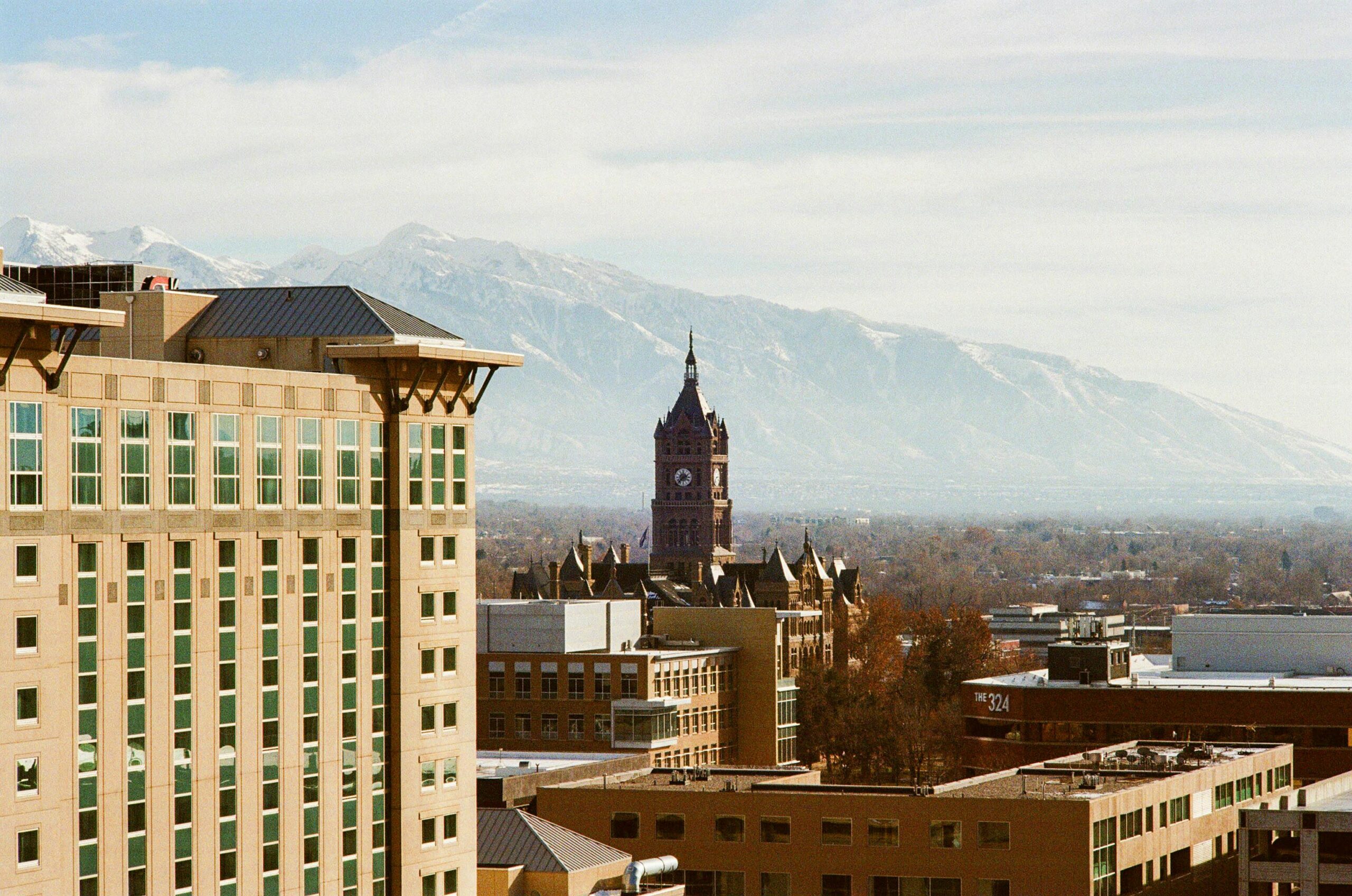
How We Think About Development in America’s Fastest-Growing State

Utah doesn’t whisper its ambitions. The numbers announce them. The Beehive State has consistently grown in population to earn a permanent place at the top of the national growth rankings. As of the most recent U.S. Census Bureau data, it is the fifth-fastest-growing state in the country, and its real GDP growth rate led the nation at 4.5% in 2024. The state’s nominal GDP crossed $300 billion for the first time in history. Unemployment sits at 3.1%, well below the national rate of 4.0%. These are not the statistics of a market you watch from a distance. These are the numbers that tell a developer where to be.

Here is how we think about it.

The Demand Story Is Structural, Not Cyclical

The first question any developer should ask about a market is whether the growth is real or borrowed. In Utah, the answer is unambiguously the former.

Utah’s population reached approximately 3.55 million as of mid-2025, up more than 18% over the past decade alone. Utah County, anchoring the Provo-Lehi corridor and the state’s booming tech sector, added nearly 16,000 residents in a single year, accounting for 36% of the state’s total growth. Cities like Saratoga Springs and Eagle Mountain, which barely existed three decades ago, are now among the fastest-growing communities in the country, posting annual growth rates of 8.4% and 6.8%, respectively, in 2025.

Crucially, this growth is not purely migration-driven, which would make it more susceptible to economic shocks. Natural population change, with more births than deaths, now accounts for 57% of Utah’s annual growth, a structural demographic tailwind that holds up across economic cycles. A young, family-forming population base creates durable, compounding demand for housing, services, hospitality, and the built environment broadly.

For a developer, that distinction matters enormously. Markets built on migration alone can reverse. Markets built on natural demographic vitality don’t.

Where We Focus — And Why

Not all of Utah’s growth is created equal, and our playbook reflects that geography matters as much as headline statistics.

The Wasatch Front remains the economic engine. Salt Lake, Utah, Davis, and Weber counties together account for two-thirds of the state’s annual population growth and the vast majority of its job creation. Utah’s information technology and professional services sectors — clustered in what’s increasingly called the “Silicon Slopes” corridor — have made outsized contributions to GDP, with the information industry growing to more than 2.7 times its 2015 output as of 2025. Construction costs on the Wasatch Front range from $280 to $550 per square foot for residential development, reflecting both the depth of demand and the constraints of a market that, by some estimates, is short by more than 37,000 housing units.

Washington County and St. George arguably represent the most compelling secondary market in the Mountain West. Washington County posted 2.3% population growth over the past year — among the highest in the state — and St. George ranked third statewide in residential permit activity. The combination of year-round sunshine, proximity to recreation, second-home demand, and retiree migration creates a hospitality and mixed-use opportunity that few comparable markets in the country can match.

Emerging ring counties — Tooele and Iron, each posting 3.0% population growth over the past year — are attracting our attention as well. These are the markets where land basis still makes sense, entitlement timelines are more manageable, and the Wasatch Front’s overflow growth is inevitably landing.

The Hospitality Lens

Utah’s five national parks, world-class ski resorts, and growing convention infrastructure drive leisure demand that spans the year rather than concentrating in a traditional peak season. At the same time, the Silicon Slopes tech corridor has built a legitimate corporate travel base — business demand that stabilizes performance across cycles when pure leisure markets soften.

Nationally, the lodging market has shown steady resilience. ADR and RevPAR have stayed near record levels through 2025, with upper-midscale and upscale select-service properties — our target segment — continuing to outperform. The select-service model aligns well with Utah’s growth profile: it serves both the business traveler driving Highway 15 between Salt Lake and Provo and the family road-tripping from Zion to Bryce. That dual demand base is rare and valuable.

We focus our hotel development on submarkets where demand generators are layered — proximity to employment corridors, access to recreational assets, and positioning within growing residential catchment areas. A hotel built purely on ski demand is a seasonal bet. A hotel built where skiing, business travel, and a growing residential population converge is a fundamentally different underwriting story.

What We Respect About This Market

Utah rewards patience and punishes shortcuts. Entitlement processes are increasingly complex as communities grapple with rapid growth and strained infrastructure. The state needs about 28,000 new housing units per year just to keep pace with population growth — yet residential permitting has contracted, falling to roughly 22,000 units in 2024, the lowest since 2016. That supply-demand gap has consequences for commercial development too: labor is tighter, construction costs are higher, and community sentiment toward new development is more nuanced than the growth headlines suggest.

We don’t ignore those friction points. We build them into our underwriting, timelines, and community engagement strategies. The developers who treat Utah as an easy market because the population curve points up are the ones who get surprised by permitting or stabilization.

The developers who do the hard work of understanding which submarkets, product types, and demand generators are truly durable — those are the ones building the portfolio this market deserves.

CategoriesCommunity

From Silicon Slopes to Salad Bowls: How Utah’s Tech Boom Is Reshaping the Fast-Casual Market

There’s a quiet revolution unfolding along the Wasatch Front, and it goes well beyond code and capital. Utah, long known for its outdoor recreation, strong family culture, and homegrown work ethic, has spent the past decade building one of the most impressive technology ecosystems in the United States. The region stretching from Salt Lake City to Provo has earned the nickname that stuck: Silicon Slopes.

But what happens to a food market when a state rapidly fills with highly educated, health-conscious, digitally native workers earning above-average salaries? It upgrades fast.

The fast-casual restaurant sector in Utah is being fundamentally transformed by the same demographic wave that is fueling its tech economy. For investors, developers, and restaurateurs who are paying attention, the opportunity is significant.

Silicon Slopes by the Numbers

To understand the food story, you first need to appreciate the scale of Utah’s tech transformation. The state led the nation in 2024 with a 4.5% real GDP growth rate, more than double the national average of 2.8%, and its nominal GDP surpassed $300 billion for the first time. Utah’s tech sector alone contributes nearly 10% of state GDP and, within the Salt Lake metro area, employs 34% more tech professionals per capita than the national average. The state is projected to add more than 50,000 new tech jobs by 2026. Companies such as Qualtrics, Domo, Pluralsight, and Ancestry are headquartered here. Adobe, Microsoft, and Goldman Sachs have established major operations along the corridor, and Adobe alone employs 2,000 people in Lehi, with room to grow to 3,000.

The result is a workforce that skews young, educated, and increasingly affluent. Utah’s median age is just 32 years, the youngest of any U.S. state, and the population surpassed 3.5 million in 2024, adding over 50,000 new residents in a single year. The region’s under-35 population, a demographic that drives disproportionate restaurant spending, is growing faster than in nearly any comparable metro in the West. Median tech wages in Utah sit at $77,492, roughly 82% above the state’s median across all occupations, giving this workforce substantial spending power.

These workers eat out often. They care deeply about sourcing ingredients. They expect digital convenience. And they’re more than willing to spend $14 on a grain bowl if the brand aligns with their values.

Fast casual, that sweet spot between fast-food efficiency and sit-down quality, is built for exactly this consumer.

The Salad Bowl Economy

Walk into any office park in Lehi, Draper, or downtown Salt Lake City around noon, and you’ll notice something. The lunch crowd isn’t heading to burger chains. Instead, they’re lining up at fast-casual concepts centered on clean proteins, global flavors, customizable bowls, and transparent supply chains.

Utah has seen explosive growth in fast-casual brands that cater precisely to this appetite. Local concepts such as Swig, Cubby’s, and Guru’s Cafe have built cult-like followings by understanding their market intimately. National players, including Cava, Sweetgreen, and Mendocino Farms, have identified Utah as a high-priority expansion market, and for good reason.

The demographics virtually guarantee success for well-executed concepts. Nationally, the U.S. fast-casual market reached approximately $48.5 billion in 2025 and is projected to nearly double to $90 billion by 2035, growing at a 6.4% CAGR. Over 63% of millennials and Gen Z consumers prefer customizable meals, and 76% of urban consumers now prefer healthier quick-service options over traditional fast food. Utah’s young, health-oriented population, with disposable income and a strong preference for experiences over things, is the archetypal fast-casual customer. Add Utah’s notably high birth rate and family-centric culture, and you have a market that values speed and quality simultaneously, exactly what fast casual delivers.

Digital Demand Is Reshaping the Physical Footprint

Tech workers don’t just change what they eat; they change how restaurants must operate. Utah’s tech-savvy consumer base has accelerated the adoption of digital ordering more than in many comparable markets. Nationally, over 68% of fast-casual transactions were initiated through online or mobile platforms as of mid-2024, with third-party delivery accounting for 49% of all orders. Mobile-first loyalty programs, third-party delivery integration, and app-based customization aren’t optional extras here; they’re table stakes.

This is directly affecting real estate. Fast-casual operators expanding into Utah are rethinking their physical footprints from the ground up. Smaller dining rooms. Dedicated pickup lanes and digital order staging areas. Ghost kitchen integrations in urban cores. Drive-thru models adapted for premium concepts that would once have been considered beneath their brand.

For commercial real estate professionals and investors, this evolution matters. The fast-casual properties being built and leased in Utah today look different from those of ten years ago, and they’re being underwritten differently as well.

What This Means for Real Estate

The intersection of tech-driven demographic growth and fast-casual expansion is creating real opportunity in Utah’s commercial property market. Utah’s economy is projected to add 330,000 jobs by 2033, a 13.4% increase, with Professional and Technical Services leading the way. Households are forecast to grow 2.4% annually, from 1.2 million to over 1.4 million by 2033. Retail corridors in Lehi, South Jordan, and Sugar House are seeing heightened demand from restaurant tenants, and landlords with well-located pads and end caps are in strong negotiating positions.

Fast-casual tenants, particularly those with national brand recognition and strong unit-level economics, are increasingly attractive to net lease investors for the same reasons QSR assets have long been favored: long lease terms, minimal landlord responsibilities, and creditworthy operators. As the fast-casual asset class matures, Utah is poised to be one of the country’s most compelling proving grounds.

The Bigger Picture

Utah’s story is ultimately about alignment. A state that attracts ambitious, health-conscious, digitally fluent workers naturally cultivates a food culture that mirrors those values. Silicon Slopes didn’t just build a tech hub; it created the conditions for a fast-casual renaissance.

For brands with the right concept and investors with the vision to follow demographic data, the path from Silicon Slopes to salad bowls isn’t a detour. It’s the whole point.


Get in touch

phone

(415) 491 – 1500

4302 Redwood Hwy Suite 200

San Rafael, CA 94903

email

info@lrecompanies.com

Get in touch

phone

(415) 491 – 1500

4302 Redwood Hwy Suite 200

San Rafael, CA 94903

email

info@lrecompanies.com

about us

The LRE & Co is a family organization that has been in real estate development, construction and the food and beverage businesses since 1999. It has been present in major markets throughout northern California and northwest Nevada.

Newsletter

Get latest news & update

© 1999 – lrecompanies.com. All rights reserved.