
Project Manager
CategoriesNews & Blog

Behind the Build: A Day in the Life of a Commercial Real Estate Project Manager

Most people notice the finished project, such as a shiny new restaurant, a busy retail space, or a modern hotel hosting its first guests. However, they don’t see the numerous decisions, challenges, and coordination efforts behind the scenes that turn these visions into reality.

At LRE & Co, our project managers are the conductors of this complex orchestra, coordinating architects, engineers, contractors, tenants, outside consultants, and municipalities to turn vision into reality. We work with a trusted network of specialized consultants, including civil engineers, environmental specialists, landscape architects, and land-use attorneys, all of whom are vital members of the project team. To give you a glimpse of what this looks like, we shadowed one of our seasoned project managers for a typical workday managing multiple active developments across California and beyond.

The Early Start

The day begins before most construction sites come to life. Over coffee, our project manager reviews overnight emails from contractors in different time zones and checks weather forecasts for three project locations. A storm system moving through Southern Oregon could affect concrete pours scheduled for later in the week at our Medford project. That detail might seem minor, but it could cascade into schedule delays if not addressed proactively.

The morning also includes a routine review of the day’s priorities across five active projects at various stages of development. One project is in the entitlements phase, navigating the planning commission approval process. Another is mid-construction, addressing inevitable field conditions that differ from the drawings. A third is approaching completion, with punch list items and final inspections on the horizon.

The Morning Coordination Call

The first formal meeting of the day is a construction coordination call with the general contractor, civil engineer, and key subcontractors for a quick-service restaurant project currently under construction. The civil engineer is one of our outside consultants, bringing specialized expertise in site development and utilities. Today’s agenda covers the underground utility installation schedule, conflicts between the grease interceptor location and existing drainage, and coordination of the paving timeline with the drive-through lane striping.

What sounds straightforward on paper becomes a negotiation of competing priorities and constraints. The paving contractor has a narrow weather window. The utility work is two days behind schedule. The tenant has equipment delivery scheduled that requires the paving to be finished. Our project manager facilitates solutions by adjusting schedules, reallocating resources, and ensuring everyone understands how their piece fits into the larger puzzle.

Tenant Coordination

Next up is a call with the real estate and construction teams of a national franchise tenant. They’re reviewing storefront signage design, exterior lighting specifications, and equipment specifications for a location currently in the planning phase. The conversation will align with the tenant’s brand standards and local sign ordinances, address energy code compliance for exterior lighting, and coordinate utility capacity for kitchen equipment loads.

This is where deep knowledge of local regulations becomes invaluable. Our project manager can immediately flag that the proposed monument sign height exceeds the local jurisdiction’s limits, saving weeks of back-and-forth revisions. Years of experience navigating these requirements across multiple markets enable us to anticipate issues before they become problems.

Site Visit

By mid-morning, it’s time to leave the office for the most critical part of the job: being on site. Today’s visit is to a multi-tenant retail building in the framing stage. Hard hats on, the project manager walks the site with the superintendent, reviewing progress against the schedule and quality standards.

The walk-through reveals what conference calls and email updates can’t capture. Framing is progressing well, but there’s a discrepancy between the architectural drawings and the actual site conditions for the storefront glazing rough opening. The project manager photographs the condition, takes measurements, and immediately calls the architect, an outside consultant, and a key team member to discuss solutions while still on site. This real-time problem-solving and collaboration prevent the crew from incorrectly framing and having to tear out and rebuild, saving both time and money.

The site visit also includes reviewing safety protocols, discussing upcoming inspections, and walking through scheduled material deliveries for the following week. Our project manager checks that the proper materials are staged, confirms the crane rental for HVAC equipment installation, and discusses weather contingency plans with the superintendent.

Plan Review and Permitting

Back at the office after grabbing lunch, the afternoon focuses on a project in the entitlement phase. Our project manager reviews the latest set of civil engineering plans, prepared by our outside civil engineering consultant, before submission to the city, ensuring that all check comments from previous plans have been addressed. This detailed review uncovers a missing call-out for ADA-compliant parking striping and a dimension error in the trash enclosure locations, small details that would have caused plan review delays if submitted incorrectly.

There’s also coordination with the planning department regarding an upcoming Site Plan and Architectural Commission hearing. Our project manager is preparing presentation materials, anticipating questions from commissioners, and ensuring all required notices are complete.

Budget and Schedule Management

Project management isn’t just about construction coordination; it’s also about financial stewardship. The afternoon includes reviewing contractors’ change order requests, assessing whether the costs are justified, and determining the impact on the overall project budget and timeline.

One change order is legitimate, driven by unforeseen soil conditions that require additional engineering. Another is questionable, with the contractor seeking further compensation for work that should have been included in the original scope. Our project manager pushes back with documentation and contract language, protecting our clients’ interests while maintaining positive contractor relationships.

Stakeholder Updates

As the workday winds down, our project manager prepares updates for ownership and stakeholders. These communications distill the day’s activities, challenges, and solutions into clear, actionable information. Progress photos from the morning site visit are compiled. Schedule updates reflecting the day’s decisions are documented. Budget-tracking spreadsheets are updated to reflect the impacts of change orders.

Tomorrow’s Preparation

Before logging off, our project manager reviews tomorrow’s schedule: two more site visits, a preconstruction meeting for a project breaking ground next month, and a critical utility coordination meeting with the local power company. Materials and information needed for each meeting are prepared and organized.

The Real Work

A day in the life of a commercial real estate project manager isn’t glamorous. It’s about anticipating problems before they arise, coordinating dozens of moving parts, making informed decisions quickly, and maintaining relationships across a complex web of professionals, from in-house team members to outside consultants, all working together toward the same goal.

At LRE & Co, our project managers have years of experience across diverse markets and project types. They understand that successful commercial development requires equal parts technical expertise, communication skills, problem-solving ability, and attention to detail. It’s demanding work, but watching a project transform from concept to completion makes every early morning and every challenging day worthwhile.

The finished building that opens for business represents thousands of decisions, hundreds of coordination efforts, and the dedication of an entire team—project managers, outside consultants, contractors, and specialists—all working together to ensure every detail is executed correctly. That’s what happens behind the scenes.

 

CategoriesNews & Blog

The Wrong Side of Town: Why National Brands Keep Missing the Mark on Location Strategy

I see it every time I drive through our markets. A national chain opens in what looks like a prime location on paper: strong demographics, high traffic counts, and proximity to a Walmart or Target anchor. Six months later, they’re struggling. Meanwhile, three miles away in a neighborhood that doesn’t fit their “model,” a competitor is thriving.

This isn’t about market research failing. It’s about something more fundamental: national brands and their site selection teams often don’t grasp the nuances of local markets when expanding. I’m not taking anything away from brokers or real estate representatives; they work within the parameters they’re given. But those parameters are frequently wrong.

The Anchor Trap

Everyone wants the Walmart or Target anchor. It’s become almost reflexive in retail site selection. High traffic, an established draw, and a built-in customer base. What’s not to love?

Except when it’s completely wrong for your brand.

Here’s what we’ve observed while developing and operating retail projects across multiple markets: traffic patterns matter more than traffic counts. A location might see 40,000 cars per day, but if those drivers are in a hurry to get somewhere else, or if your target customer doesn’t shop where your anchor draws from, those numbers are meaningless.

I’ve watched premium fast-casual concepts place locations near big-box anchors that attract price-conscious shoppers. The demographic data looked perfect, but the shopping behavior was all wrong. Those customers came to save money at the anchor, not spend $15 on lunch. Meanwhile, the same brand could have succeeded two miles away in an area with slightly lower household incomes but different spending patterns and daytime populations.

The Right Side vs. The Wrong Side

Every market has invisible lines that locals understand instinctively, but that spreadsheets can’t capture. Which side of the highway do people prefer? Which neighborhoods do they avoid, even if demographics suggest they shouldn’t? Where do they actually spend their discretionary income?

In one of our Southern California markets, there’s a clear dividing line, literally a major boulevard. The demographics are nearly identical on both sides. But residents on one side rarely cross over for retail, while those on the other side draw from everywhere. No amount of traffic studies would reveal this without local knowledge.

We’ve seen national brands place locations on the “wrong” side and wonder why they can’t meet projections. From our perspective as developers who live in these markets, the answer was obvious before they opened. But it wasn’t obvious to a site selection team working from corporate headquarters three states away.

The Future Expansion Mistake

Here’s where it gets even more expensive: poor location strategy doesn’t just hurt today’s store; it kills tomorrow’s expansion opportunities.

When a brand enters a market in the wrong location and underperforms, they don’t blame the site selection. They blame the market. “We tried Sacramento, it didn’t work for us.” Or Fresno. Or Bakersfield. So, they write off the entire region, even though the right location could have been wildly successful.

We see this repeatedly. A national restaurant chain opens its first location in a market based on conventional wisdom, near the regional mall, next to the recognizable anchors, on the “retail corridor” everyone knows. It underperforms. They close it and never return. Five years later, a competitor opens a location in the neighborhood commercial center, three miles away, and runs a waiting list.

The first brand didn’t fail because the market was wrong. They failed because they didn’t understand how that specific market works.

What Developers See That Others Don’t

As developers and operators, we live in these markets. We see where people actually go. We understand traffic patterns on Tuesday afternoons and Saturday mornings. We know which neighborhoods are growing and which are stagnant, which communities have disposable income and which are house-rich but cash-poor.

This isn’t mystical insight; it’s pattern recognition from being present. We see how existing businesses perform. We notice when certain areas stay busy while others sit empty. We understand the subtle differences between submarkets that look identical in demographic reports.

When we’re developing a project, we’re not just placing tenants in spaces. We’re thinking about how each brand will actually perform in that specific location, with those specific neighbors and that specific customer base. We’re considering not just who lives nearby, but also who works nearby, who drives by, and who already has a reason to be in the area.

The Spreadsheet Problem

The fundamental issue is that modern site selection has become too dependent on data that doesn’t capture reality. Traffic counts, demographic rings, and competitor mapping are useful tools. But they’re being used as answers when they should be questions.

A location might check every box in the site selection model and still be wrong. The demographics are right, but the psychographics are off. The traffic is there, but the sightlines are poor. The anchor draws customers, but they’re not your customers. The rent is reasonable, but only because everyone who knows the market knows it’s a challenging location.

We’ve learned that understanding a market means understanding layers that spreadsheets can’t capture. It means knowing that in this city, people won’t cross the freeway for retail. In this neighborhood, they prefer local concepts to chains. In this submarket, the customer base is limited to specific categories. These insights come from experience, presence, and actually operating in these markets.

A Different Approach

The most successful national brands we’ve worked with partner with local developers and operators who know the market intimately. They bring operational expertise and brand power, but they trust local knowledge for site selection.

They’re willing to hear “that location won’t work, but this one will” even when it contradicts their model. They understand that success in Denver doesn’t guarantee the same approach will work in Riverside. They’re patient enough to wait for the right opportunity rather than settle for a mediocre location.

These brands enter markets strategically. They establish strong positions in locations that work. They build customer bases. They create success that enables expansion rather than failure that prevents it.

The Bottom Line

Real estate remains a local business, even for national brands. The sooner companies recognize this, the fewer costly mistakes they’ll make.

The right location in the wrong part of town isn’t the right location. Perfect demographics with the wrong traffic pattern won’t save a store. And failing in a market because of poor selection doesn’t mean the market is bad; it means your selection process needs improvement.

As developers and operators, we’ve learned these lessons by seeing them play out repeatedly. The question is whether expanding brands will learn from them before repeating the same costly mistakes across markets.

Real estate representatives and brokers can only work with what they’re given. It’s time for brands to provide them with better parameters, ones that recognize that understanding local markets requires more than data. It requires presence, experience, and a willingness to trust that the “wrong” side of town might actually be exactly right.


CategoriesCommunity News & Blog

LRE & Co Announces New Commercial Development in Medford, Oregon

Today, we announced plans for the Medford project, a new commercial development in Medford, Oregon. This marks the company’s ongoing growth and expansion into the Oregon market over recent years.

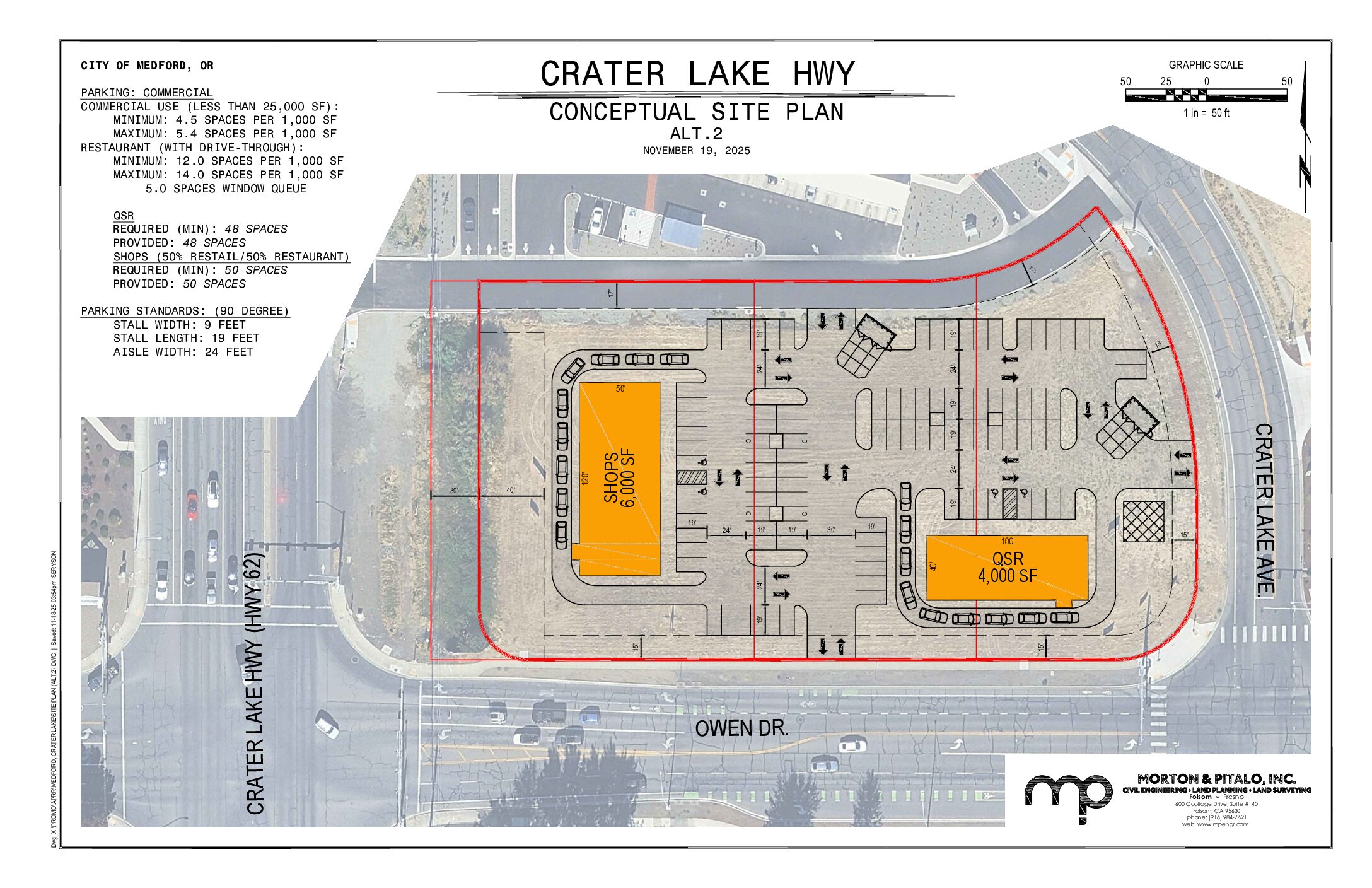
Located along Crater Lake Highway (Highway 62) in the Tower Business Park, the Medford project will feature approximately 10,000 square feet of commercial space, including a 4,000-square-foot quick-service restaurant with a drive-through and a 6,000-square-foot multi-tenant retail building with a drive-thru.

“We’re thrilled to introduce the Medford project to Southern Oregon,” said Akki Patel, CEO of LRE & Co. “This development reflects our commitment to creating quality commercial spaces that serve both businesses and the communities they’re part of. Medford’s strategic location and strong growth trajectory make it an ideal market for LRE & Co’s expansion beyond our traditional Northern California footprint.”

The development will include approximately 98 parking spaces, two drive-through facilities, and pedestrian-friendly design elements throughout the property. The site is strategically positioned along Crater Lake Highway to capitalize on strong traffic while remaining compatible with the surrounding business park.

LRE & Co is currently working through the city’s entitlement process, including Site Plan Review with the Medford Site Plan and Architectural Commission. Tenant announcements and construction timelines will be released as the project advances through the city’s approval process.

CategoriesNews & Blog

California Hospitality Market 2025: A Developer’s View from the Frontlines

At LRE & Co, we develop hospitality properties, as well as retail and mixed-use spaces, throughout Northern California. When you’re in the business of creating places where people stay, you learn to interpret the market not through press releases but by understanding what truly works in practice. 

The California hospitality market in 2025 tells a nuanced story—one that’s neither the doom-and-gloom narrative some headlines suggest nor the triumphant recovery others celebrate. It’s more complex than that, and understanding this complexity is essential for anyone investing capital in this space. 

The California Reality: Strong Fundamentals, Stubborn Challenges 

California’s hotel industry market size reached $37 billion in 2025, growing at an average annual rate of 12.4% since 2020. That sounds impressive until you look at what’s really happening underneath those numbers. 

California hotel sales volume fell by 15.3% in 2024 compared to 2023, while the number of individual sales decreased by 7.5%. More worrying, foreclosure activity surged significantly—from 53 notices of default filed in December 2023 to 86 in December 2024. The gap between buyer and seller expectations remains large, with many sellers still hoping for 2021-2022 pricing that today’s market cannot support. 

This gap presents opportunities for well-funded buyers willing to wait, but it also indicates real struggles in parts of the market. Hotels that succeeded during the post-pandemic boom are finding that 2025 requires different approaches than 2022 did. 

Regional Performance: The Tale of Three Markets 

Southern California’s three primary markets—San Diego, Los Angeles, and Orange County—each tell distinct stories. 

San Diego leads the state with a 12-month average occupancy of 73.8% through June 2025, consistently outperforming other California markets. RevPAR grew 2.4%, exceeding the national average of 1.5%. The market benefits from diverse demand generators: leisure attractions such as the San Diego Zoo and beaches, major conventions including Comic-Con with 135,000+ attendees, and strong weekday business from the life sciences, healthcare, and military sectors. 

But even San Diego faces challenges. The large 1,600-room Gaylord Pacific Resort opened in May 2025, adding significant new supply. Leisure travel, which accounts for about 55% of room nights, experienced modest declines during the summer as budget-conscious travelers chose vacation rentals or alternative destinations. 

Los Angeles saw RevPAR grow 5% in Q1 2025, driven in part by displaced residents and recovery teams from January’s wildfires. While the fires didn’t damage hotels or major attractions, this created unusual demand that may not persist. Inbound international travel remains below pre-pandemic levels, accounting for under 20% of hotel room demand, compared with nearly 25% in 2019. 

Orange County has effectively stopped new construction due to high costs, creating supply constraints that support existing properties but limit market growth. 

The Western States: Las Vegas Sets Records, Arizona Builds Momentum 

Las Vegas continues its impressive run. The market welcomed 40.8 million visitors in 2024, and while occupancy at 83.6% still falls short of pre-pandemic levels, ADR reached $193.16, and RevPAR hit $161.48—record figures for the third year in a row. Gaming revenue for Clark County totaled $13.5 billion, setting another annual record. 

What Vegas shows is that experience-driven hospitality can charge premium rates even when occupancy isn’t fully back. The new developments, attractions, and events—like the Sphere and major sporting events—generate demand that supports higher prices. 

Arizona’s hospitality industry is flourishing in ways that deserve more recognition. The state predicts nearly 6,000 new hospitality and entertainment jobs will be created by 2036. Tucson’s trailing 12-month RevPAR increased impressively by 7.9%, with ADR rising 6.3%. Arizona’s favorable business environment, expanding population, and major events make it an increasingly appealing alternative to California’s higher costs. 

The Cost Crisis: Wages, PIPs, and Margin Compression 

Here’s the uncomfortable truth about California hospitality in 2025: operating costs are rising faster than revenue. 

San Diego faces a potential increase in the hotel minimum wage to $25 an hour if pending legislation passes. Property Improvement Plans (PIPs), required by franchisors, now cost between $35,000 and $40,000 per room for mid-market, select-service hotels—a 30% to 40% rise from pre-COVID levels. These aren’t optional expenses; they are requirements for maintaining franchise agreements. 

Meanwhile, increases in labor, insurance, utilities, and property tax costs are outpacing RevPAR growth across the industry, leading to shrinking margins for operators. Hospitality is unique among commercial real estate asset classes in requiring existing owners to reinvest millions of dollars into properties to maintain current NOI levels. 

In California specifically, this cost burden, along with the state’s regulatory complexity, makes development and operations more challenging than in neighboring states. It’s not insurmountable, but it requires disciplined underwriting and realistic pro formas. 

The Transaction Market: Waiting Game Continues 

Hotel transaction activity has remained subdued throughout 2025. In the past 12 months, hotel transaction volume declined nearly 75%. Since Los Angeles’s “Mansion Tax” took effect in April 2023, only four hotels in the LA market traded for more than $20 million, two of which were tax-exempt. 

This creates a standoff. Sellers remember peak pricing from 2021-2022. Buyers see compressed margins, rising costs, and uncertain demand. CoStar Analytics forecasts a 75 to 125 basis-point increase in cap rates over the next 12 months, making conditions more attractive for buyers than for sellers. 

For developers and investors, this indicates that 2025-2026 might offer acquisition opportunities—especially for distressed assets or properties where owners can’t meet PIP requirements—but only if you’re prepared to invest capital in repositioning and maintain realistic expectations about stabilized returns. 

What’s Actually Working: The 2025 Playbook 

Based on our experience and market observation, here’s what performs in 2025’s California hospitality market: 

The luxury and upper-upscale segments show resilience. Premium properties that deliver exceptional experiences continue commanding strong rates. Luxury RevPAR is up 2.9% year-to-date nationally, significantly outperforming other segments. 

Experience-driven properties outperform commodity hotels. Wellness programs, unique F&B offerings, and memorable amenities create differentiation that justifies premium pricing. Two-thirds of people worldwide now expect high-quality, personalized, and wellness-enhancing experiences to be integrated into every space they engage with. 

Suburban and resort locations benefit from sustained leisure demand. While urban business travel recovery remains incomplete, drive-to destinations and vacation properties continue to perform steadily. 

Markets with diverse demand generators weather volatility better. San Diego succeeds because it balances leisure, group, corporate, and military segments. Properties dependent on single-demand sources face a higher risk. 

Technology-enabled operations improve margins. AI-driven revenue management, contactless services, and operational automation help offset rising labor costs. The hospitality industry is rapidly adopting these tools out of necessity, not preference. 

Looking Ahead: Cautious Optimism with Eyes Wide Open 

California’s hospitality fundamentals remain stable, with low vacancy rates and steady—if modest—rent growth. Visit California forecasts stronger performance outside gateway markets, with 2.2% revenue growth compared to 1.8% in gateway regions. Significant events in 2026—San Francisco hosting the Super Bowl, Los Angeles and San Francisco hosting FIFA World Cup matches—are expected to boost demand. 

But the industry faces a “two-speed recovery,” with luxury and upscale properties thriving while midscale and economy segments struggle. This bifurcation will likely persist through 2026, creating both opportunities and risks depending on your market position. 

At LRE & Co, we’re approaching California hospitality with measured optimism. The market isn’t broken, but it’s demanding. Success requires: 

  • Disciplined underwriting that reflects actual operating costs, not pre-pandemic assumptions 
  • Experience-focused positioning that gives guests reasons to choose you over alternatives 
  • Operational excellence because margins for error have vanished 
  • Realistic timelines for both development and stabilization 

The developers and operators who succeed in 2025 are those who’ve adjusted their strategies to current realities instead of waiting for yesterday’s market to return. They’ve accepted that premium markets require premium execution, and they have built teams and systems equipped to deliver it. 

California hospitality isn’t easy in 2025, but for those willing to do the hard work, invest in quality, and execute with discipline, opportunity still exists. You have to earn it more than you did a few years ago. 

And frankly, that’s how it should be. 


Beyond Profit: How Real Estate Developers Can Serve Their Communities
CategoriesNews & Blog

Beyond Profit: How Real Estate Developers Can Serve Their Communities

In an industry often driven by bottom lines and profit margins, there’s a growing recognition that real estate development bears a deeper responsibility. As developers, we don’t just build structures; we shape neighborhoods, influence local economies, and directly impact the daily lives of the people who call these communities home. The question isn’t whether we should give back, but rather how we can integrate community service into the very fabric of our business model.

I’ve always believed that as a company grows, so should its commitment to the community. Success shouldn’t be measured solely by square footage developed or deals closed, but by the positive impact we leave behind. When we expand our operations, we must also expand our dedication to serving the people and places that enable that growth.

Building More Than Buildings

Real estate development is fundamentally community-centered work. Every project we take on becomes part of a neighborhood’s identity and infrastructure. This offers a unique opportunity, and responsibility, to look beyond individual properties and consider the larger ecosystem we’re helping to shape.

Innovative developers understand that thriving communities foster sustainable business environments. When we invest in the people and places around our projects, we’re not just acting philanthropically; we’re creating conditions for long-term success. A vibrant, well-supported community attracts quality tenants, maintains property values, and builds a positive reputation that makes future projects more feasible.

Scaling Impact with Growth

As development companies grow, the temptation is often to focus only on expanding operations, taking on more projects, landing bigger deals, and expanding into a broader geographic scope. However, growth offers an even more powerful opportunity: the chance to increase our community impact equally.

A one-person operation might sponsor a local Little League team. A growing firm should consider affordable housing initiatives, workforce development programs, or infrastructure improvements that benefit entire neighborhoods. As our resources grow, so should our vision for community service.

This scaling of commitment serves multiple purposes. It demonstrates to stakeholders—from investors to local governments—that we’re dedicated to sustainable, responsible growth. It helps foster community relationships that facilitate future development. Most importantly, it ensures that the communities supporting our success share in that prosperity.

Practical Ways to Serve

Community service in real estate development takes many forms. It might involve including affordable housing units in market-rate projects, even if not mandated by law. It could also mean partnering with local organizations to provide job training for community members and ensure they have opportunities to participate in construction and property management.

Some developers focus on environmental stewardship by implementing green building practices that lower community-wide energy costs and improve air quality. Others invest in public spaces, such as parks, community centers, or pedestrian infrastructure, that boost quality of life beyond their property boundaries.

The key is finding alignment between community needs and your company’s capabilities. A developer with expertise in commercial real estate might support local small-business incubators. Those focused on residential development might create programs to help first-time homebuyers navigate the process.

The Ripple Effect

When developers focus on community service, it sparks a ripple effect across the industry. It challenges the idea that maximizing profit and supporting communities are mutually exclusive. It attracts talent—both employees and partners—who want to work for companies that prioritize values beyond the bottom line.

Furthermore, it alters how communities perceive development. Instead of viewing developers as exploitative forces that benefit from neighborhoods without giving back, communities start to see us as partners in mutual growth. This change in view can transform the development process, turning potential opponents into allies and paving the way for successful projects.

Growing Responsibility

The real estate industry influences the physical and social fabric of our communities in significant ways. With that influence comes responsibility, one that should grow along with our success. As we grow our businesses, we must also strengthen our commitments to the communities that enable that success.

This isn’t about charity or public relations. It’s about understanding that our industry’s long-term success depends on the well-being of the communities we serve. When we invest in those communities as intentionally as we invest in properties, everyone gains. That’s not just good ethics, it’s good business.

The question for every growing development company should be: Are we serving our communities as ambitiously as we’re striving for our growth targets? If the answer is no, it’s time to reassess our definition of success.


Housing Crisis
CategoriesNews & Blog

California’s Housing Crisis: The Hidden Commercial Real Estate Consequence

California’s housing crisis has made headlines for years. Still, its significant ripple effect on commercial real estate often goes unnoticed, altering perceptions of property investment, urban planning, and economic growth throughout the state.

The Workforce Migration Problem

The connection is simple but often missed: when employees can’t afford to live near their jobs, commercial real estate declines. We’re seeing a significant outmigration of middle-income workers from California’s big metro areas, especially the Bay Area and Los Angeles. These aren’t just numbers; they include teachers, nurses, retail managers, and skilled tradespeople who form the backbone of our local economies.

This migration creates a paradox for commercial landlords and investors. Class A office buildings in prime locations struggle to maintain occupancy, not because companies don’t want the space, but because they can’t staff their offices. I’ve seen firsthand how businesses are forced to choose between premium locations and accessible ones, often opting for secondary markets where their employees can afford to live.

The Adaptive Reuse Opportunity

However, a crisis sparks innovation. The housing shortage is boosting one of the most exciting trends in commercial real estate: adaptive reuse conversions. Outdated office buildings and underperforming retail centers are increasingly being turned into residential units. Although regulatory hurdles still pose a challenge, California’s building codes weren’t designed for such conversions, but forward-thinking developers are finding ways to overcome these obstacles.

These projects serve dual purposes: addressing the housing shortage while revitalizing struggling commercial buildings. The key is identifying properties with the right fundamentals: adequate ceiling heights, access to natural light, and locations with existing infrastructure.

Retail’s Transformation

The housing crisis is also changing retail real estate. As residential density increases in city centers, often due to required affordable housing projects, we’re seeing a rise in demand for neighborhood-focused retail. Mixed-use developments that combine housing with ground-floor commercial spaces are becoming common, creating walkable communities that cut down on commute times and boost quality of life.

Savvy investors are focusing on emerging neighborhoods with active housing development, expecting increased retail and service demand that comes with residential growth.

The Policy Wildcard

Sacramento’s legislative responses to the housing crisis, like SB 9’s lot-splitting rules and density bonus programs, are fundamentally changing land use economics. Commercial property owners now need to evaluate their holdings from a residential angle, considering whether switching to housing development could provide better returns.

Looking Forward

The intersection of California’s housing crisis and commercial real estate is not temporary; it signals a fundamental shift that demands strategic adaptation. Success will go to those who understand that housing affordability is not just a social issue; it’s a commercial real estate concern with tangible effects on asset values, tenant demand, and investment returns.

The question isn’t whether the housing crisis will continue to affect commercial real estate, but whether we’re ready to change our strategies accordingly.

Connect with LRE & Companies: For development opportunities, partnerships, or to share market insights, contact me at akkip@letapgroup.com or (415) 491-1500.

CategoriesNews & Blog

The Joy of Being a Commercial Real Estate Developer in California: Riding the Golden State’s Real Estate Waves

There’s something uniquely thrilling about being a commercial real estate developer in California. Every morning, I wake up knowing that I’m working in one of the world’s most dynamic and demanding markets where innovation meets opportunity, and where the next project could transform a community.

The Highs: Where Dreams Meet Reality

The peaks in California commercial development are unlike anywhere else. When you successfully navigate a complex entitlement process and break ground on a mixed-use project in San Francisco or deliver a state-of-the-art logistics facility in the Inland Empire, the satisfaction is deep. You’re not just building structures; you’re creating ecosystems where businesses thrive, jobs are created, and communities grow.

California’s diverse economy offers a wide range of development opportunities. Projects can include everything from advanced research facilities for growing biotech firms to manufacturing plants supporting renewable energy efforts. This variety keeps the work exciting and intellectually stimulating, while placing developers at the forefront of emerging industries.

The financial rewards can also be significant. When market conditions are right and you’ve positioned a project properly, California’s premium markets can provide exceptional returns that justify the complexity and risk involved in development here.

The Lows: Navigating Complex Waters

Let’s be honest—California development isn’t for the faint of heart. The regulatory environment can be complex, with multiple jurisdictions, environmental reviews, and approval processes that can extend timelines and increase budgets. What seems like a simple project can turn into a multi-year journey through various agencies and community meetings.

Construction costs in California consistently rank among the nation’s highest, driven by strict building codes, labor shortages, and material costs. Add in the ongoing threat of seismic requirements and environmental regulations, and project budgets can quickly go over initial estimates.

Market volatility poses another challenge. California’s economy, though strong, can experience sharp swings. Tech downturns, interest rate changes, and evolving work habits, especially after the pandemic, can quickly shift demand across different property types.

Areas of Opportunity: The Future is Bright

Despite the challenges, California offers unrivaled opportunities for innovative developers. The state’s focus on sustainability drives demand for green buildings and renewable energy projects. ESG-focused development isn’t just fashionable here—it’s becoming crucial for long-term success.

The evolution of work patterns has created opportunities in adaptive reuse projects, converting outdated office buildings into mixed-use developments or modern logistics facilities. California’s housing crisis also opens opportunities for innovative residential-commercial hybrid projects that meet multiple needs at once.

Emerging technologies such as artificial intelligence, biotechnology, and clean energy continue to increase demand for specialized facilities. Developers who can anticipate these industries’ unique spatial requirements will be well-positioned for the next wave of growth.

The Bottom Line

Being a commercial real estate developer in California involves navigating complexity while seizing exceptional opportunities. Yes, the challenges are substantial, but so are the rewards—both financially and personally. We’re not just constructing properties; we’re shaping the future of one of the world’s most vital economies.

Every project teaches us something new, every challenge we overcome builds resilience, and every successful development helps California continue to evolve as a global leader in innovation and commerce.


Get in touch

phone

(415) 491 – 1500

4302 Redwood Hwy Suite 200

San Rafael, CA 94903

email

info@lrecompanies.com

Get in touch

phone

(415) 491 – 1500

4302 Redwood Hwy Suite 200

San Rafael, CA 94903

email

info@lrecompanies.com

about us

The LRE & Co is a family organization that has been in real estate development, construction and the food and beverage businesses since 1999. It has been present in major markets throughout northern California and northwest Nevada.

Newsletter

Get latest news & update

© 1999 – lrecompanies.com. All rights reserved.