
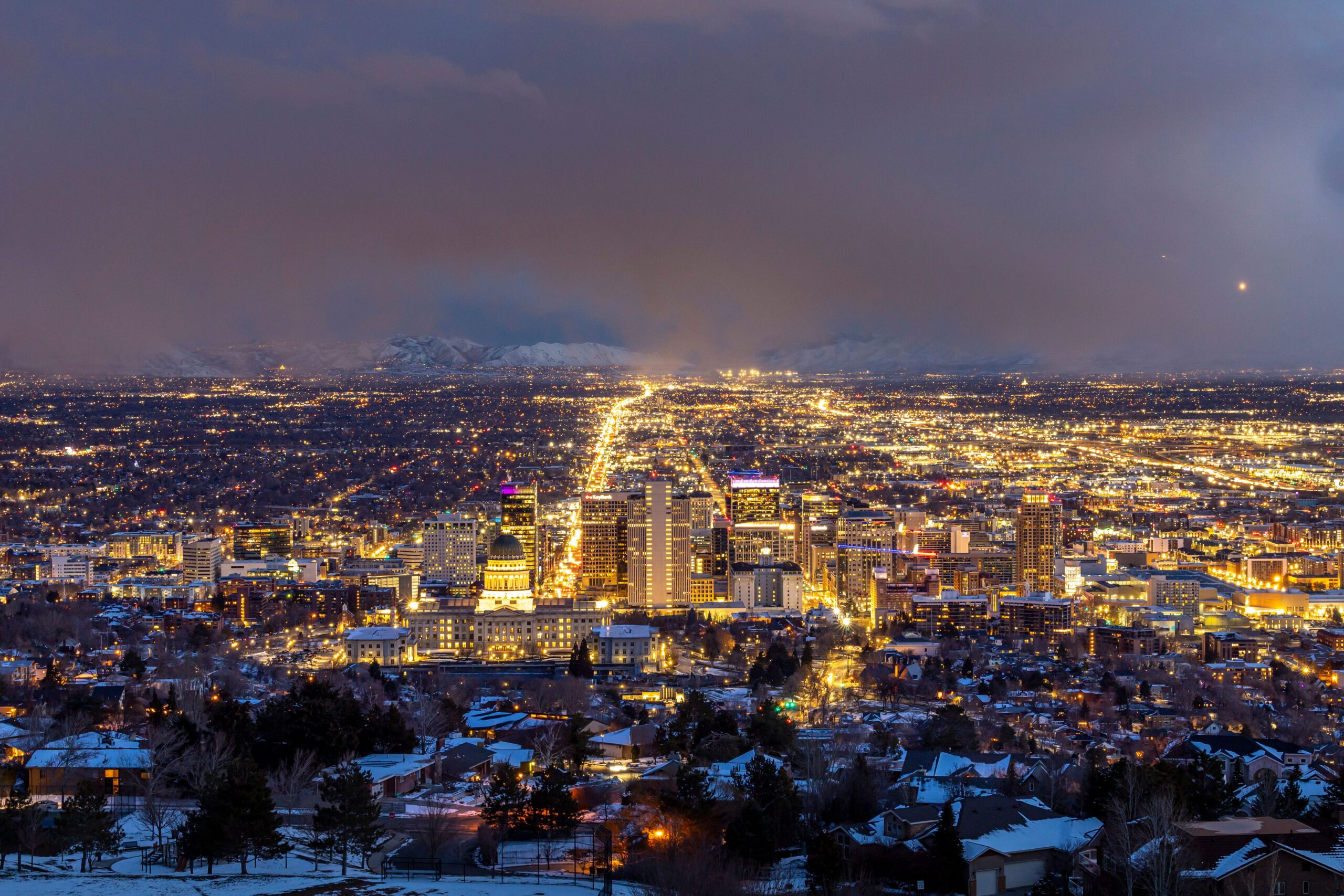
How We Think About Development in America’s Fastest-Growing State
Utah doesn’t whisper its ambitions. The numbers announce them. The Beehive State has consistently grown in population to earn a permanent place at the top of the national growth rankings. As of the most recent U.S. Census Bureau data, it is the fifth-fastest-growing state in the country, and its real GDP growth rate led the nation at 4.5% in 2024. The state’s nominal GDP crossed $300 billion for the first time in history. Unemployment sits at 3.1%, well below the national rate of 4.0%. These are not the statistics of a market you watch from a distance. These are the numbers that tell a developer where to be.
Here is how we think about it.
The Demand Story Is Structural, Not Cyclical
The first question any developer should ask about a market is whether the growth is real or borrowed. In Utah, the answer is unambiguously the former.
Utah’s population reached approximately 3.55 million as of mid-2025, up more than 18% over the past decade alone. Utah County, anchoring the Provo-Lehi corridor and the state’s booming tech sector, added nearly 16,000 residents in a single year, accounting for 36% of the state’s total growth. Cities like Saratoga Springs and Eagle Mountain, which barely existed three decades ago, are now among the fastest-growing communities in the country, posting annual growth rates of 8.4% and 6.8%, respectively, in 2025.
Crucially, this growth is not purely migration-driven, which would make it more susceptible to economic shocks. Natural population change, with more births than deaths, now accounts for 57% of Utah’s annual growth, a structural demographic tailwind that holds up across economic cycles. A young, family-forming population base creates durable, compounding demand for housing, services, hospitality, and the built environment broadly.
For a developer, that distinction matters enormously. Markets built on migration alone can reverse. Markets built on natural demographic vitality don’t.
Where We Focus — And Why
Not all of Utah’s growth is created equal, and our playbook reflects that geography matters as much as headline statistics.
The Wasatch Front remains the economic engine. Salt Lake, Utah, Davis, and Weber counties together account for two-thirds of the state’s annual population growth and the vast majority of its job creation. Utah’s information technology and professional services sectors — clustered in what’s increasingly called the “Silicon Slopes” corridor — have made outsized contributions to GDP, with the information industry growing to more than 2.7 times its 2015 output as of 2025. Construction costs on the Wasatch Front range from $280 to $550 per square foot for residential development, reflecting both the depth of demand and the constraints of a market that, by some estimates, is short by more than 37,000 housing units.
Washington County and St. George arguably represent the most compelling secondary market in the Mountain West. Washington County posted 2.3% population growth over the past year — among the highest in the state — and St. George ranked third statewide in residential permit activity. The combination of year-round sunshine, proximity to recreation, second-home demand, and retiree migration creates a hospitality and mixed-use opportunity that few comparable markets in the country can match.
Emerging ring counties — Tooele and Iron, each posting 3.0% population growth over the past year — are attracting our attention as well. These are the markets where land basis still makes sense, entitlement timelines are more manageable, and the Wasatch Front’s overflow growth is inevitably landing.
The Hospitality Lens
Utah’s five national parks, world-class ski resorts, and growing convention infrastructure drive leisure demand that spans the year rather than concentrating in a traditional peak season. At the same time, the Silicon Slopes tech corridor has built a legitimate corporate travel base — business demand that stabilizes performance across cycles when pure leisure markets soften.
Nationally, the lodging market has shown steady resilience. ADR and RevPAR have stayed near record levels through 2025, with upper-midscale and upscale select-service properties — our target segment — continuing to outperform. The select-service model aligns well with Utah’s growth profile: it serves both the business traveler driving Highway 15 between Salt Lake and Provo and the family road-tripping from Zion to Bryce. That dual demand base is rare and valuable.
We focus our hotel development on submarkets where demand generators are layered — proximity to employment corridors, access to recreational assets, and positioning within growing residential catchment areas. A hotel built purely on ski demand is a seasonal bet. A hotel built where skiing, business travel, and a growing residential population converge is a fundamentally different underwriting story.
What We Respect About This Market
Utah rewards patience and punishes shortcuts. Entitlement processes are increasingly complex as communities grapple with rapid growth and strained infrastructure. The state needs about 28,000 new housing units per year just to keep pace with population growth — yet residential permitting has contracted, falling to roughly 22,000 units in 2024, the lowest since 2016. That supply-demand gap has consequences for commercial development too: labor is tighter, construction costs are higher, and community sentiment toward new development is more nuanced than the growth headlines suggest.
We don’t ignore those friction points. We build them into our underwriting, timelines, and community engagement strategies. The developers who treat Utah as an easy market because the population curve points up are the ones who get surprised by permitting or stabilization.
The developers who do the hard work of understanding which submarkets, product types, and demand generators are truly durable — those are the ones building the portfolio this market deserves.