
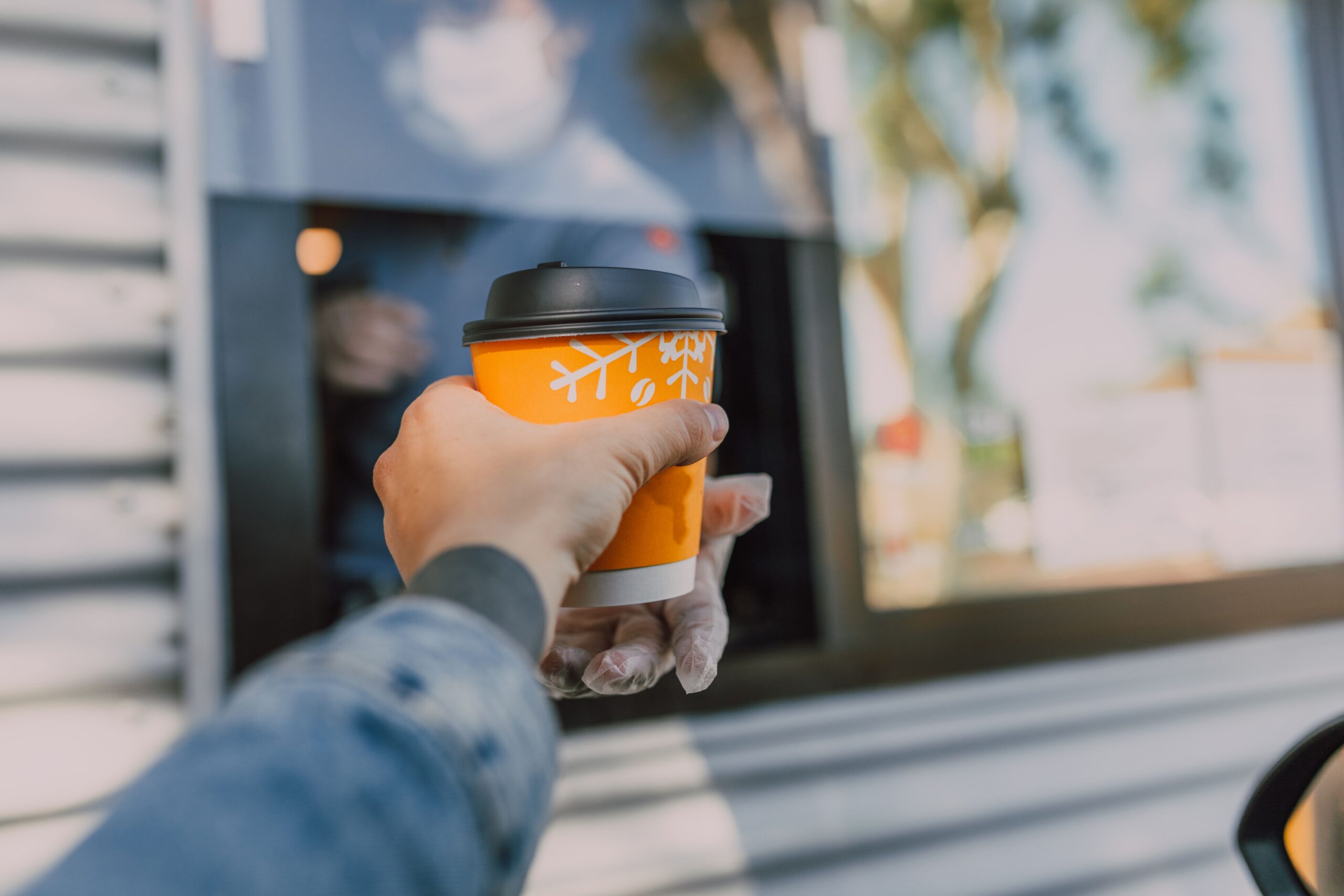
The Drive-Thru Dilemma: Balancing Traffic Flow, Community Aesthetics, and Profitability
Few types of commercial real estate cause as much friction—both physical and metaphorical—as the drive-thru lane. For developers and municipalities, it represents a challenge at the crossroads of three key priorities: maintaining efficient vehicle flow, preserving neighborhood character, and safeguarding the financial stability of quick-service restaurant (QSR) properties, which are among the most resilient net-lease investments. Incorrectly balancing these factors can lead to lost sales, community resistance, and permitting delays. Conversely, precise site planning is crucial to achieving the right balance and ensuring success.
Why the Drive-Thru Still Drives the Deal
The drive-thru remains the core revenue source for QSR. Industry data indicates that drive-thru orders make up more than half of all transactions across QSR and fast-casual brands nationwide. In suburban and busy area markets, this share exceeds 60 percent—especially in many western U.S. growth corridors where LRE & Companies operates. During the pandemic, some chains saw a drive-thru dependence rise from about 60 percent to as high as 70 or 80 percent of total sales, a level that has mostly persisted, not reversed. This reliance is a double-edged sword. When functioning well, the drive-thru is the most efficient revenue generator on site. When it falters, the impact is swift: industry-wide, average service time is around five and a half minutes, order accuracy has dropped to roughly 87 percent, and drive-thru traffic has declined by 5 to 8 percent year-over-year as digital ordering, delivery, and takeout take more share. Slower, less accurate lanes lead to abandoned queues, resulting in lost sales that aren’t reflected in the P&L until the quarter ends.
The Traffic Flow Problem
Single-lane, single-window drive-thrus were designed for lower traffic volumes. Today’s demand, peak kitchen output of about 150 orders per hour at top-performing locations, has led operators and developers to adopt multi-lane setups, dedicated mobile-order pickup lanes, and express lanes for app-based orders. For developers, this isn’t merely an aesthetic update; it’s a strategic site-plan choice affecting stacking depth, curb cuts, parking ratios, and how a pad site connects with the shared access drive of a larger retail or restaurant complex.
Undersized stacking remains one of the most frequent—and costly—errors in QSR site planning. A lane that backs into a parking lot or, worse, onto a public right-of-way, not only frustrates customers but also attracts scrutiny from planning authorities and risks delaying approval for other tenants sharing the same site. Accurately estimating stacking needs during the entitlement process, before pouring concrete, is much more cost-effective than retrofitting a lane after a traffic complaint is filed.
Community Aesthetics: The Entitlement Reality
Across the western U.S., municipalities increasingly view drive-thru approvals as a negotiation rather than a mere formality. Conditions such as screening walls, enhanced landscaping, articulated building facades, and noise control for order-point speakers are now common in many areas, especially in communities that previously opposed drive-thru growth due to aesthetic or traffic safety concerns. A thoughtfully designed pad site sees these requirements as opportunities: creating buildings that look appealing from the street and screening stacking lanes to preserve sightlines, thereby protecting both the tenant’s brand and surrounding property values that attract future tenants. Experienced development partners stand out by anticipating the planning commission’s aesthetic concerns and integrating solutions early in the design process, which helps reduce entitlement timelines and minimizes project carry costs.
The Profitability Equation
For NNN investors and developers, the profitability of drive-thru locations is closely linked to the overall QSR investment strategy. About 70% of QSR customers now use mobile apps or digital platforms to place orders, with digital orders averaging about 20% more per ticket than in-store orders. This means the pickup lane must manage two separate customer flows, traditional ordering and pre-ordered digital pickups, without causing delays. Chains that have separated these flows report significant improvements in throughput and profit margins; automation and dedicated pickup systems have also resulted in labor savings of several hundred basis points for some early adopters.
Meanwhile, the overall traffic trend in QSRs is more uncertain than it was two years ago. Several major chains have experienced softness in same-store sales and declining traffic through late 2025, as promotional strategies aimed at value shifted transaction timing rather than increasing overall visits. This situation emphasizes the importance of site fundamentals, such as cap rates, trade area strength, co-tenancy, and drive-thru design, since, in a market with flatter traffic, choosing sites that efficiently convert visits into sales preserves value.
Finding the Balance
Long-term successful developments rarely focus on maximizing a single variable, such as increasing capacity at the cost of streetscape or sacrificing aesthetic detail for better throughput. Instead, they are designed with all three considerations in mind from the start: traffic engineering that accounts for peak-hour volume, design that respects the local community, and a pro forma reflecting the actual capacity once operations begin. As drive-thru demand evolves and municipalities across the western U.S. tighten their design standards, maintaining this balance will become increasingly important for the planning, approval, and implementation of QSR and retail projects.