
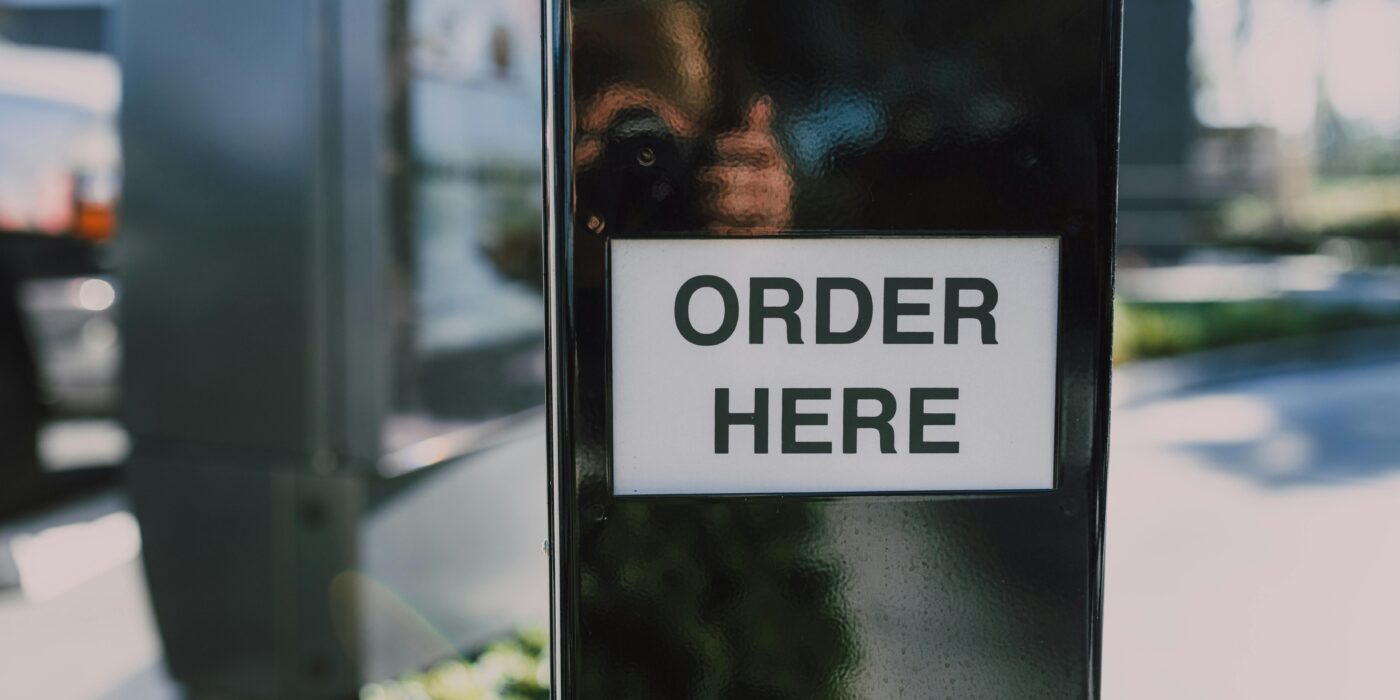
The drive-thru lane has been a fixture of American life since the 1940s. For most of that history, it was treated as a functional afterthought, a concession to car-centric suburbs, a way to move customers through without seating them. Unglamorous. Utilitarian. Taken for granted.
That’s changing fast. Today, the drive-thru isn’t just surviving in the age of delivery apps and digital-first dining; it’s being reinvented from the ground up. For those watching where capital, technology, and consumer behavior converge, the drive-thru’s renaissance is one of the most consequential developments in commercial real estate and food service right now.
The Numbers Tell a Compelling Story
Start with the fundamentals. The U.S. QSR industry was valued at $289.68 billion in 2024, with over 50% of revenue coming through drive-thru lanes. More strikingly, drive-thru services account for approximately 75% of quick-service restaurant profits, a figure that has made the format indispensable to operators managing tight margins amid inflation.
The broader off-premises trend reinforces this. Digital ordering and delivery have grown at 300% the rate of dine-in since 2014. Today, 52% of consumers, rising to 67% of millennials and 63% of Gen Z, say ordering takeout is an essential part of their lifestyle. That’s not a trend. That’s a structural shift in how Americans eat.
For freestanding drive-thru-only units, the economics are particularly striking. According to QSR Magazine’s 2025 Drive-Thru Report, these properties averaged $9.227 million in median annual sales in 2024. In a single-tenant net lease context, that level of per-square-foot revenue is exceptionally hard to find elsewhere in retail.
Architecture as Strategy
What’s most telling about the drive-thru moment isn’t the volume; it’s how seriously brands are treating the physical design of the lane. The humble speaker box and single-lane window are being replaced by purpose-built environments that look more like engineering projects than restaurant upgrades.
Taco Bell’s “Defy” concept in Brooklyn Park, Minnesota, is perhaps the most dramatic example. The two-story structure completely separates the kitchen from the drive-thru lanes, delivering orders to customers via a proprietary vertical lift system. Four lanes, dedicated to mobile orders, third-party delivery pickups, and on-site customers, are designed to achieve service times of 2 minutes or less. This isn’t an iteration. It’s a complete rethinking of what a restaurant can be.
Chick-fil-A has introduced its own version of this ambition with the “Elevated Drive-Thru” concept, launched in late summer 2024. The design places the kitchen above four ground-level lanes and uses a conveyor system to deliver food downward to waiting vehicles. It’s a solution to the brand’s perennial challenge: Chick-fil-A is among the slowest drive-thrus in the industry by measured service time, yet it consistently posts some of the highest per-unit sales volumes in the entire QSR space. Its locations average over $9.3 million in annual sales, with some units surpassing $19 million.
These architectural innovations aren’t happening because brands have money to burn. They’re happening because the drive-thru lane is now seen as a competitive moat, something worth building around, not just retrofitting.
AI Moves In
If the physical transformation of the drive-thru is striking, the technological transformation is even more significant. Artificial intelligence has moved from pilot programs to large-scale deployment among the industry’s largest operators.
Taco Bell has deployed voice AI ordering at hundreds of U.S. locations, with the technology already installed in more than 100 units across 13 states by mid-2024. Yum! Brands: Taco Bell’s parent, which also owns KFC and Pizza Hut, announced a partnership with NVIDIA in early 2025 to use computer vision to analyze drive-thru traffic patterns and improve real-time staffing decisions. The goal is a fully integrated digital ecosystem in which every touchpoint, from loyalty programs to kitchen operations, operates in coordination.
McDonald’s has deployed AI-powered outdoor digital menu boards at 12,000 drive-thru locations, using dynamic pricing and personalization to optimize upsells and reduce dwell time. Restaurant Brands International reported a 33% increase in promoted-item sales and a 38% rise in overall sales tied to its digital board rollout at Tim Hortons.
The throughput implications are significant. When AI reduces order errors, speeds service, and anticipates demand, the revenue-per-lane calculus improves dramatically. As revenue-per-lane improves, the real estate underlying that lane becomes more valuable.
What This Means for Real Estate Investors
The evolution of the drive-thru has direct consequences for how these properties should be evaluated and underwritten.
First, format matters more than it used to. A freestanding drive-thru-only unit, especially one designed around multi-lane architecture and digital integration, is fundamentally different from a traditional inline fast-food location. It commands premium attention in acquisitions because it is operationally superior, harder to replicate, and typically associated with longer initial lease terms.
Second, the tenant quality driving this transformation is investable. The brands most aggressively upgrading their drive-thru infrastructure are precisely the operators investors want on long-term net leases: investment-grade credits, sophisticated franchisees with strong unit economics, and brands that are actively investing in the future of their physical footprints rather than winding them down.
Third, the format aligns with what net lease investors prize most. Fast-casual and QSR drive-thru formats continue to attract capital in the net lease market, supported by strong brand performance and operational efficiency, drawing both private investors, who accounted for 47% of acquisitions in early 2025, and a resurgent wave of international capital.
The Bigger Takeaway
The drive-thru’s moment isn’t really about convenience. Convenience is table stakes; every restaurant format is optimizing for it now. What the drive-thru’s reinvention signals is something larger: that the physical restaurant, well designed and intelligently operated, still has an enormous role to play in how Americans consume food.
The brands and investors who understand this, seeing the drive-thru lane not as a legacy asset but as a technology platform anchored in real estate, are the ones building durable competitive advantages.
The lane is just the beginning.