
Every property is someone’s home, someone’s business, someone’s future.
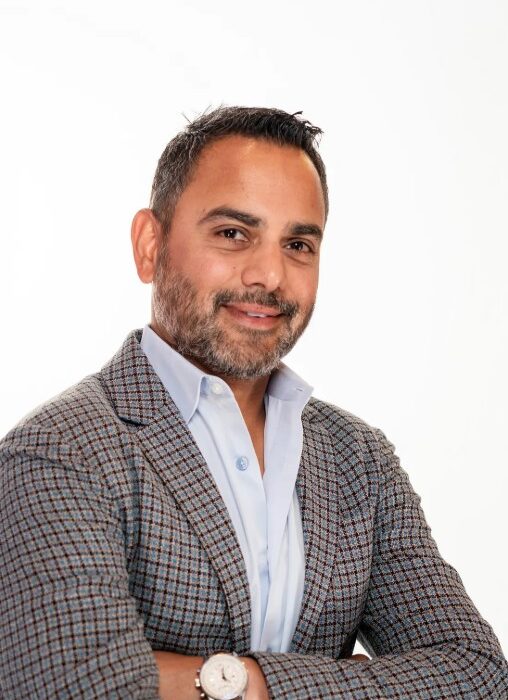
Asa part of our series about “How A Single Choice Can Redefine A Leadership Journey”, we had the pleasure of interviewing Akki Patel, the founder and leader of LRE & Co., a family-owned organization established in 1999 that specializes in real estate development, construction, and hospitality. Beginning his entrepreneurial journey at 20 with his first restaurant, Patel had built a diverse business empire, opening and operating more than 300 restaurants while managing over 850 establishments across California and northern Nevada.
Patel holds an undergraduate degree in accounting from the University of San Diego and has experience in the venture capital industry. He is a member of the Young Presidents’ Organization and serves on the advisory boards of several companies and nonprofits. His leadership philosophy emphasizes creating economic opportunities, delivering stakeholder value, and fostering a diverse, dynamic workforce dedicated to excellence.
Thank you so much for joining us in this interview series. Before we dive into our discussion, our readers would love to “get to know you” a bit better. Can you share with us the backstory about what brought you to your specific career path?
I grew up watching my family navigate the complexities of business and real estate, which sparked early curiosity about how value is created and maintained. But what truly drew me to this path wasn’t just the transactions — it was the understanding that real estate, at its core, is about people and communities. Every property is someone’s home, someone’s business, someone’s future.
I began my career in finance, which taught me discipline and analytical rigor. However, I felt most energized when working on deals that involved a human element — where you could see the direct impact on tenants, partners, and communities. That inspired me to start LRE & Co, where we aimed to build something that combined strong financial performance with genuine relationships. I wanted to create a company where doing right by people wasn’t just a slogan but the foundation of everything we do.
Can you share the most interesting story that happened to you since you started your career?
In 2019, we acquired a company that, by traditional metrics, we probably overpaid for. Then 2020 came, and like so many businesses, it took a hit. By late 2021, we sold it. On a spreadsheet, you’d call that a loss. But here’s what the numbers didn’t show: that acquisition brought us two incredible people who are now essential to LRE.
These weren’t just employees joining a team; they transformed our entire culture. The way they show up for partners, communicate with lenders and tenants, and handle on-site tasks raised our standards across the board. Today, they’re not just colleagues; they’re family. They embody the friendship, loyalty, and work ethic that’s easy to talk about but hard to find.
Looking back, I call it an “accidental acquihire.” We didn’t plan it that way, but we gained something far more valuable than the original business model promised. It taught me that if you judge a deal solely on the spreadsheet, you’ll miss the compounding value of the right people. That’s the kind of return that keeps paying dividends.
What do you think makes your company stand out? Can you share a story?
LRE stands out because we truly believe that the best return comes from the people, not just the people we serve, but also those we work with. We’ve built a culture where relationships aren’t transactional; they are foundational.
The story I just shared about the 2019 acquisition clearly illustrates this. We could have seen that deal as a financial mistake, accepted the loss, and moved on with a cynical attitude. Instead, we understood what really mattered: two outstanding individuals who improved everything we do. That experience strengthened our belief that talent and culture grow over time in ways that balance sheets can’t predict.
We support our partners, tenants, and team with consistent dedication. We innovate not just in deals, but also in building trust and providing value. That’s what makes us different — we’re playing the long game, and we’re counting on people every time.
You are a successful business leader. Which three character traits do you think were most instrumental to your success? Can you please share a story or example for each?
1. Long-term thinking over short-term wins The 2019 acquisition serves as a perfect example. When the business faced difficulties and we sold it in 2021, the immediate financial results didn’t look promising. However, I never judged success based on that single sale. The long-term benefit — two outstanding team members who continue to create value — far exceeded the short-term profit and loss statement. I’ve discovered that the best decisions often take years to fully unfold.
2. Conviction in people over assets Throughout my career, I’ve seen deals succeed or fail depending on the people involved. When we evaluate opportunities, we spend as much time assessing cultural fit and team capability as we do analyzing the numbers. In real estate, you can have the best property in the best location, but without the right people managing it, building relationships with tenants, and solving problems creatively, it’s just another building. Our success comes from consistently prioritizing character and competence over flashy assets.
3. Humility to learn from every outcome Not every deal turns out precisely as planned; that’s just reality. What matters is what you learn. The 2019 acquisition taught me that “failure” and “success” aren’t always binary. We could have been rigid about our original thesis, but instead, we stayed open to discovering unexpected value. That humility to adapt and to see beyond our initial assumptions has been crucial. It keeps us innovative and honest about what really matters.
Ok, thank you for that. Let’s now jump to the primary focus of our interview. What was the pivotal decision that transformed your approach to leadership, and what prompted you to make it?
The key decision happened after my 2019–2021 experience. I realized I needed to fundamentally change how I define success — not just for individual deals, but for LRE as a whole. The message was simple but powerful: two people I deeply respect are thriving at our company despite the “failed” transaction that brought them here.
I decided to stop leading primarily through financial metrics and instead focus on people and culture first. That doesn’t mean we ignore the numbers — we’re strict about performance — but it means we make decisions asking: “Who does this bring us closer to? Who does this help us become? What does this build beyond the immediate transaction?”
This wasn’t about becoming soft or idealistic. It was about realizing that sustainable, compounding success comes from attracting, keeping, and empowering exceptional people. Once I made that shift, everything changed — from how we structure deals to how we handle setbacks and how we measure our progress.
How did this single choice impact your personal growth and your view on what it means to lead?
This choice freed me from the anxiety of perfection. When you’re solely focused on metrics, every deal that doesn’t meet projections feels like a personal failure. But when you lead with a people-first approach, you develop a different perspective: you see opportunities for growth, learning, and relationship-building even in challenging situations.
Personally, it made me a better listener and observer. I started paying more attention to how people communicate, collaborate, and handle pressure. I became less interested in being the smartest person in the room and more focused on creating an environment where smart people thrive.
My view on leadership shifted from “making the right calls” to “building the right culture.” Authentic leadership isn’t about having all the answers — it’s about assembling a team that together has better answers than you ever could alone. It’s about creating environments where people bring their best selves to work and truly feel valued. That’s much more rewarding than just hitting quarterly targets.
What were some of the immediate and long-term effects of this decision on your team or organization?
Immediate effects: Our retention rates improved significantly. People felt recognized and appreciated beyond their productivity. Decision-making grew more collaborative. Team members understood their perspectives mattered, not just their execution. We began attracting diverse candidates — people motivated by culture and mission, not just pay. Trust levels rose throughout the organization. When people see you’re personally invested in them, they’re more willing to take risks and openly discuss challenges.
Long-term effects: Our reputation in the market has shifted. Partners and tenants began choosing us not just for our capabilities, but also for how we show up and treat people. Innovation accelerates when people feel secure and valued, making them more creative and willing to challenge the status quo. Resilience has improved. We’ve weathered market fluctuations and unexpected challenges better because our team has strong loyalty and commitment to one another. Our performance metrics actually improved. Paradoxically, by focusing less obsessively on the numbers and more on our people, our financial results strengthened because we were building something sustainable. The compound effect has been remarkable. The two team members from the 2019 acquisition have mentored others, elevated standards, and helped us attract even more talented people. It fosters a virtuous cycle.
How did you handle any uncertainty or doubt while making this critical choice?
Honestly, I experienced moments of doubt. The business world constantly proves that financial performance is king, and when you discuss culture and people-first leadership, some people see you as naïve or soft.
I managed the uncertainty by focusing on what I could observe and measure differently. I watched how those two team members from the acquisition transformed our operations. I saw morale improve. I noticed that our best people were staying longer, and our recruitment was becoming easier. These tangible signs gave me confidence that this wasn’t just feel-good philosophy — it was practical and effective.
I also relied on trusted advisors who had built sustainable, people-focused organizations. Their experiences confirmed that you don’t have to choose between a strong culture and strong performance — in fact, the two support each other.
When doubt arose, I reminded myself: the old method provided predictable results. This new method was delivering compounding returns and greater fulfillment. That trade-off felt worth the uncertainty.
What lessons did you learn from this decision that you continue to apply in your leadership today?
Lesson 1: Speed is essential, but direction is more crucial. That experience taught me that moving quickly to attract talent — even through an unconventional route — can cut years off the recruiting and development process. However, it only works if you’re clear about your culture and values. I now focus on cultural fit and character as much as capability in every hiring decision.
Lesson 2: The “cost” of investing in people is often undervalued. We paid a premium for that company and sold it at a loss. Traditional analysis says we failed. But the actual return comes every day and raises our standards. I’ve learned to look beyond immediate costs and see the long-term growth potential of the right people.
Lesson 3: Transparency and honesty build trust. When we sold that business, we were open with our team about what happened and what we learned. That vulnerability strengthened relationships rather than weakening them. I continue to lead with transparency because it fosters the trust needed for people to do their best work.
Lesson 4: Culture gives you a competitive edge. In our industry, many firms have access to similar capital, deals, and expertise. What sets us apart is how we collaborate, treat partners, and solve problems. I defend and nurture our culture as passionately as I protect our financials.
Ok super. Here is the main question of our interview. What are your “Five Things You Need to be a Transformational Leader”? If you can, please share a story or an example for each.
1 . Value people over assets The 2019 acquisition clarified this for me. We purchased a business that didn’t succeed financially, but gained two people who transformed our company. Transformational leaders recognize that talent, character, and culture create lasting value in ways that products, technology, or even real estate alone cannot. Now, every major decision I make starts with: “How does this affect our people? Who does this bring us closer to?” When you consistently focus on people, you build something that can withstand any market condition.
2. Embrace speed and adaptability over perfect planning That same acquisition taught me about speed. In hindsight, it was an “accidental acquihire” that condensed a year’s worth of recruitment and training into a single decision. We didn’t execute flawlessly, but we acted with conviction. Transformational leaders don’t wait for perfect information — they make informed bets and adapt quickly. The ability to move fast, learn, and adjust outweighs having a flawless five-year plan. Markets change, opportunities vanish, and talent is hired elsewhere while you’re still analyzing.
3. Lead with transparency and authenticity When we sold that business in 2021, I could have ignored it or spun it in a positive light. Instead, I was honest with our team about what happened and what we learned. That honesty strengthened trust and showed that it’s okay to take calculated risks that don’t always work out as planned. Transformational leaders foster environments where people can be honest about challenges, learn from setbacks, and innovate without fear. Authenticity isn’t a weakness — it’s the foundation of true influence.
4. Measure success by cultural compound interest, not just quarterly returns Great people improve everything: decision-making, managing pressure, and building trust with partners and tenants. That cultural boost pays off project after project, year after year. I’ve learned to evaluate decisions by asking: “Does this strengthen our culture? Will this grow stronger over time?” Sometimes that means passing on a lucrative deal that would compromise our values or investing in team development that doesn’t show immediate ROI. Transformational leaders play the long game and trust that a strong culture yields compounding returns.
5. Maintain conviction in your values during uncertainty The period from 2019 to 2021 tested my conviction. The business faced struggles and pandemic challenges and eventually sold at a loss. There were moments when I doubted the decision. But I held onto my core belief: we’re building something bigger than any single transaction. Those two team members showed that staying true to our values — even when the spreadsheet suggests otherwise — was the right decision. Transformational leaders don’t abandon their principles when times get tough; they double down on what matters most: their people, their culture, and their mission.
Were there any unexpected challenges or rewards that emerged from this choice?
Unexpected challenges: The biggest challenge was patience within the organization. When shifting to a people-first culture, some results take time to appear. In the months immediately after deciding to focus on culture, we had to resist pressure to deliver quick financial gains — discussions with stakeholders questioned whether we were being too soft or losing our competitive advantage. Staying firm during that time required discipline.
Another challenge was hiring. We became more selective, which sometimes meant leaving positions open longer than we would have liked. When you’re committed to cultural fit and character, you can’t just fill seats; you have to find the right people. That patience was challenging but ultimately necessary.
Unexpected rewards: The rewards exceeded my expectations. First, our market reputation changed. We started attracting inbound interest from talented people who wanted to work in our culture. That dramatically reduced recruiting costs and improved quality.
Second, our relationships with partners and tenants grew stronger. When your team genuinely cares and acts with integrity, people take notice. We’ve secured deals and kept tenants primarily because of how we treat others, not just because of our pricing or capabilities.
Third, personal fulfillment. Creating a company where people thrive and feel appreciated is far more rewarding than simply maximizing profits. Going to work and seeing people you genuinely care about doing their best, that’s a reward I didn’t fully expect but now can’t imagine living without.
Finally, those two team members from the acquisition have become informal ambassadors of our culture, helping new people onboard and modeling what we value. They’ve multiplied their impact far beyond what we could have predicted.
How has this decision influenced the advice or guidance you offer to emerging leaders?
I tell emerging leaders: Don’t wait for permission to lead with your values. Earlier in my career, I needed to hit certain milestones or achieve a certain status before I could lead the way I wanted. The 2019 acquisition taught me that you can start building the culture and organization you believe in right now, regardless of your title or resources.
Here’s the specific guidance I share: 1. Redefine success early. Don’t let others dictate what metrics matter. If people and culture are essential to you, make them explicit priorities from day one, not something you’ll “get to later.”
2. Trust your observations over conventional wisdom. I saw two incredible people thriving despite a “failed” transaction. That observation was more valuable than any business school framework. Pay attention to what’s working, not just what should work in theory.
3. Price is just one part of the deal. Whether you’re evaluating an acquisition, a partnership, or a hire, look beyond the immediate cost. Ask about cultural contribution, long-term potential, and intangible value. Some of the best investments look overpriced at first.
4. Build your team like your reputation depends on it — because it does. Every person you bring into your organization shapes your culture and your future. Be rigorous and patient about cultural fit. One wrong hire can set you back more than an empty seat.
5. Be willing to look foolish in the short term for long-term gain. Our 2019 acquisition looked like a mistake for a while. But I knew what we’d gained. Don’t let short-term critics deter you from building something sustainable.
The emerging leaders who resonate with this approach are building the companies I’m excited to see in ten years.
You are a person of great influence. If you could start a movement that would bring the most amount of good to the most amount of people, what would that be? You never know what your idea can trigger. 🙂
I’d start a movement called “Return on People” that fundamentally reframes how business success is measured and valued.
Here’s the concept: Companies would adopt a dual reporting framework that measures and publicly shares not just financial performance, but also people performance — retention rates, internal mobility, employee growth trajectories, cultural health indicators, and community impact. The goal would be to make “people returns” as important as financial returns in how we evaluate business success.
Imagine if every company had to answer: How many people did you develop this year? How many careers did you advance? How did your employees’ lives improve? How strong is your culture? What’s your compounding people value?
This would create several ripple effects: For companies, It would redirect competition toward creating better workplaces rather than simply maximizing productivity. Companies would focus on investing in people development because it’s publicly recognized and appreciated.
For employees: People would have better information about where to work. They could compare companies not just on salary, but on genuine investment in people.
For society: As more companies compete in people development, we will see stronger communities, improved mental health, increased economic mobility, and more sustainable business practices.
For capitalism itself: We will demonstrate that you don’t need to choose between profits and people — actually, investing in people leads to better long-term financial results.
The movement would start with companies voluntarily adopting this framework, sharing best practices, and building a community around a people-first business approach. Over time, it could influence investors, boards, and eventually policy.
I genuinely believe the future of business is human-centered, and this movement would accelerate that transition. The companies that win in the long run will be the ones that understand: the best return is the people.
How can our readers further follow your work online?
The best way to follow our work and philosophy is through:
LinkedIn: You’ll find me sharing stories about people-first leadership, lessons from the real estate trenches, and insights on building sustainable culture. I try to be transparent about both successes and learning moments. Search for Akki Patel, https://www.linkedin.com/in/akki-patel-875757163/ or LRE & Co, https://www.linkedin.com/company/lre-companies/
LRE & Co. website: We share updates about our projects, team, and approach to real estate investment and management. https://lrecompanies.com/
I’m also always open to conversations with people building people-first organizations or emerging leaders who want to talk about balancing performance with culture. Feel free to reach out directly through LinkedIn — I genuinely enjoy those connections.
Thank you for the time you spent sharing these fantastic insights. We wish you only continued success in your great work!
Thank you for the thoughtful questions. This conversation reinforced why I love what we’re building at LRE. If even one reader walks away thinking differently about how they value people in their organization, this will have been time well spent.
I appreciate the opportunity to share our story, including the messy, unexpected parts. That’s where the real learning happens. I wish you and your readers continued success — and remember: bet on people. That’s the return that endures.
Thank you!